


Why Choose Us
Our products
Our products mainly cover Industrial Non-woven Wipers, Household Wipes, Medical Wipes, Beauty Care products, etc.
Sales team
We own a professional sales team who can service you within 24 hours.We are sure any of your inquiry will get our prompt attention and reply.
Products applications
We are a professional factory dedicated to the research and development, production, sales, and OEM service of nonwoven cleaning products which are widely used in Automotive Refinishing, Aerospace, Hospitality and Food Service, and Industrial and Manufacturing Cleaning.
Our service
We not only provide professional nonwoven solutions, but also established a perfect after-sales system, we promise to feedback to our customers in 24 hours.


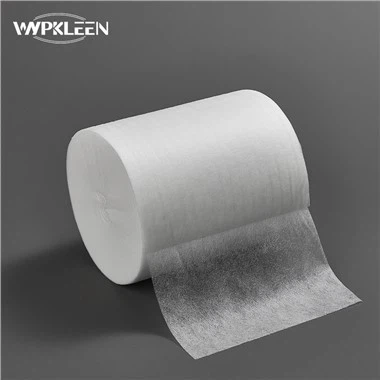

Spunbond nonwoven fabric, a pivotal innovation in the textile industry, is a type of fabric made from spun filaments. The process involves spinning molten thermoplastic polymer filaments into fine threads, stretching and laying them into a web. Typically, thermal processes bond the web to form a strong, durable fabric.
This method differs from meltblown technology, which extrudes molten polymer fibers through smaller nozzles, exposes them to high-speed hot air that blows them into even finer fibers, and creates a denser but less durable material.
Benefits of Spunbond Nonwoven Fabric
Eco-Friendly Manufacturing
Non-woven fabric is manufactured using a process that eliminates the need for weaving, knitting, or spinning. This results in a significantly lower environmental impact compared to traditional fabric production methods. The reduced energy consumption and minimal waste make non-woven fabric a frontrunner in sustainable manufacturing practices.
Versatility in Applications
One of the standout features of non-woven fabric is its versatility. From healthcare to agriculture, and from fashion to packaging, this material finds applications in diverse industries. Its adaptability makes it a go-to choice for various products, allowing for innovation and creativity in design and functionality.
Durability and Strength
Non-woven fabric boasts exceptional durability and strength. Despite its lightweight nature, it can withstand heavy loads and resist wear and tear. This makes it an ideal choice for products that require longevity and robustness, providing value for consumers and contributing to a reduction in disposable goods.
Breathability and Comfort
In industries like healthcare and fashion, breathability and comfort are crucial factors. Non-woven fabric excels in these aspects, allowing for the creation of breathable yet protective garments and products. This not only enhances user comfort but also expands the range of applications in industries where comfort is paramount.
Cost-Effectiveness
Beyond its environmental and functional advantages, non-woven fabric offers cost-effectiveness. The streamlined manufacturing process, coupled with its durability, results in products that are not only sustainable but also budget-friendly. This makes it an economically viable choice for businesses aiming to balance quality and cost.
Recyclability and Reusability
Non-woven fabric is not only recyclable but also lends itself well to reusability. This aligns with the growing trend of reducing single-use items and promotes a circular economy. By choosing products made from non-woven fabric, consumers actively participate in the movement towards a more sustainable and responsible lifestyle.
Cataloging & Kinds Of Spun Bond Non Woven Fabric


Spun-Bonded Nonwoven Fabric
Polymers are utilized to create Spun-bonded nonwoven materials. The polymer threads are built to go through the extruder, extending it to an unceasing filament which is further supper steadily and lay in a mesh. The melting and spinning process results in an inter-tangled mesh of yarns. After chemical, heat, or mechanical dealing the subsequent web forms the final material.
Spunlace Nonwoven Fabric
This distinctive nonwoven material gets its name from the fantastic procedure of its creation, where high-pressure water jets are used to entangle and conglomerate the mesh of various coatings of yarn. The high pressure strengthens the threads, but the subsequent thread is not as sturdy as other nonwoven materials. Often fibers like silk, polyester, nylon, bamboo fibers, wood pulp, and viscose threads are utilized to cultivate Spunlace, which is utilized to create disposable surgical gowns, filters, face masks, wet wipes, etc.
Heat Bounded Nonwoven Fabric
The main binding procedure for this nonwoven fabric is heating. The fiber mesh is collected with adhesives and preserved with increased heat. The bonds in the coating of fibers get heated by spread overheat. On conserving, the web of fibers gets jointed into a single nonwoven fabric.
Melt-blown Nonwoven Fabric
A complex, systematic procedure is instigated to cultivate and build melt-blown nonwoven material. The melted polymer fiber is extruded through a die with hundreds of small holes in it. The holes are the sizes of the subsequent threads. Hot air is gusted over the threads to cool them, and the fiber meshes are together on a collector screen. It is here that the threads combine to form the pp nonwoven fabric.
Wet Nonwoven Fabric
The raw fabric that is the fibers are located in an aqueous medium. It helps the threads to unfold into single-fiber threads. Diverse kinds of tough raw fabrics are additional to the deferred fibrous mass to form a slurry. This slurry-like mass is preserved to form the nonwoven fabric.
Stitch-Bonded Nonwoven Fabric
This shawl spun loop structure nonwoven fabric achieves strength from its coatings, strengthening the structure of the final material, and making it sturdy. The different coatings include fiber mesh, yarn layer, etc.
Hydrophilic Nonwoven Fabric
The hydrophilic nonwoven material is utilized to create sanitary fabrics and other medical-grade or surgical goods. The fabric is soft to the touch and delicate to the skin.
Properties Of Nonwoven Fabric
There are various usages of nonwoven material in the modern world. The affordability of the material is one of the reasons for the increase in the usage of the material. The decomposable nature of the nonwoven fabric makes it an abundant choice over plastic. Nonwoven fabric is not appropriate for manufacturing clothing due to sturdiness issues. Still, it is outstanding to produce single-use medical tools. Nonwoven fabric is swapping polyurethane foam at a stable speed. Bags and other supply fabrics can be created from nonwoven fabrics. The materials are waterproof, making them an exceptional choice for this efficacy.
Common Uses of Polypropylene Spunbond Nonwoven Fabric
Medical and Healthcare Applications
One of the most critical applications of polypropylene spunbond nonwoven fabric is in the medical and healthcare industry. It is widely used to produce surgical gowns, masks, and drapes due to its ability to provide a barrier against contaminants while remaining breathable. The fabric's hypoallergenic properties also make it ideal for products that come into direct contact with the skin.
Protective Clothing
In industrial settings, polypropylene spunbond nonwoven fabric is used to create protective clothing for workers. Its durability and resistance to abrasion make it suitable for lab coats, coveralls, and other protective gear that safeguards against chemicals, dust, and other hazards. The fabric’s lightweight nature ensures comfort and ease of movement, which is crucial for workers in various fields.
Agricultural Use
The agricultural industry benefits significantly from Manufacturing of non woven fabric. It is commonly used for creating crop covers and weed barriers. These fabrics help in regulating soil temperature, conserving moisture, and protecting plants from pests and harsh weather conditions. Additionally, the fabric’s breathability allows for better air and water permeability, contributing to healthier plant growth.
Geotextiles
In civil engineering and construction, polypropylene spunbond nonwoven fabric plays a vital role as a geotextile. It is used in road construction, erosion control, and drainage systems. The fabric acts as a filter, separating soil particles while allowing water to pass through. This property helps in stabilizing soil and preventing erosion, ensuring the longevity and stability of various structures.
Home and Household Products
Polypropylene spunbond nonwoven fabric is also found in various home and household products. It is used in making items such as reusable shopping bags, furniture covers, and storage solutions. The fabric’s strength and ease of cleaning make it a practical choice for everyday use. Moreover, its affordability and versatility contribute to its popularity in the production of these products.
Hygiene Products
In the hygiene sector, Non woven fabric spunbond is essential for the production of diapers, feminine hygiene products, and adult incontinence products. Its absorbent nature and softness enhance comfort and effectiveness. The fabric’s ability to wick moisture away while maintaining a dry surface is crucial for maintaining hygiene and preventing leaks.
Medical, Personal Care & Hygiene: The material is utilized to construct surgical masks, surgical covering, operation gowns, and hospital bed sheets, among other medical usages. Diapers, medical caps, sanitary napkins, shoe cover, surgical dress, Quarantine Gown, functioning coat, sterilizing bag, throwaway health cloth, etc.,
Clothing & Accessories: Coveralls, beddings, apparel, all types of the synthetic leather base cloth, etc.
Agriculture: Crop Covers, Weed Control material, Nursery Overwintering, Roots Bags, crop shield fabrics, non-woven for seeds. Anti-aging non-woven material is largely utilized in weed control in farming, seeds breeding, crop shielding. The UV-stable non-woven can be tarnished in nature; it is environment-friendly and leaves no remains behind.
Structure, Furniture packaging: Roofing and Tile Underlayment, Pipe Wrap, food packaging, Sofa, and Mattress Lining

Is Spunbond Non-woven Fabric Eco-friendly – Biodegradable or recyclable?

It is often a point of discussion that whether the non-woven fabric is biodegradable or not? In most cases, it depends upon the types of nonwoven made from various types of fibres. The type of fiber primarily determines whether a nonwoven fabric is biodegradable or not.
In most cases, Spunbond Polypropylene fabric is used in most of the day-to-day applications. And as against popular notion, PP or polypropylene is not biodegradable, having said that Spunbond can be produced with biodegradable fibres; however, it is a small market as biodegradable fibers are twice as expensive as Polypropylene.
Nonwoven bags are recyclable. Hence, it can be claimed that nonwoven bags are environmentally friendly. Spunbond polypropylene fabrics do not harm the environment and they are environment friendly than plastic products.
This question of whether PPE is eco-friendly or not is nothing new. Although science and experience claim that this material is among the most sustainable ones, we have at present to cater to a variety of industries for various applications. However, this is just a silver lining the entire picture is rather grim. PPR items still reach landfills instead of recycling plants although some companies are taking initiatives and taking steps forward. There are UN Sustainable Development goals also for which many companies are working collectively.
5 Steps of PP Spunbond Non Woven Fabric Manufacturing Process
PP spunbond non woven fabric is a type of non woven material made from polypropylene (PP) fibers. It is produced using a process called spun-bond technology, which involves extruding molten polymer through fine nozzles to create continuous filaments that are then laid down in a random pattern onto a moving conveyor belt.
Polymer Melting
The process of making PP spunbond nonwovens begins with the melting of the polymer. The polymer is melted in an extruder and then extruded through a spinneret.
Filament Extrusion
The extruded polymer is then forced through fine nozzles to create continuous filaments. The filaments are cooled and solidified as they exit the spinneret.
Filament Laying
The filaments are laid down in a random pattern onto a moving conveyor belt. The conveyor belt moves at a controlled speed to ensure that the filaments are laid down evenly.
Bonding
The web is then bonded together by thermal, chemical, or mechanical means. Thermal bonding involves heating the web to a temperature that causes the fibers to bond together. Chemical bonding involves applying a chemical binder to the web that causes the fibers to bond together. Mechanical bonding involves using needles or other mechanical means to physically bond the fibers together.
Finishing
The finished PP spunbond non woven fabric is then rolled onto a spool or cut into sheets for further processing.
Is PP Spunbond Nonwoven Waterproof?
PP spunbond nonwoven is water-repellent. When water is poured on the surface of the nonwoven under static conditions, water droplets will form, but the water will slowly penetrate to the other side.
Therefore, the nonwoven is not waterproof. Moreover, it has a certain permeability, so if no other treatment is done, water will penetrate directly. If you want to make the non-woven fabric waterproof, you can laminate the surface with a PE film, so that it can achieve waterproof, moisture-proof and oil-proof effects.

Factors Affecting the Weight of Nonwovens
Fabric weight (or density) influences various properties of nonwovens, such as their tensile strength, breaking point, tear resistance, and air and water permeability. Here’s how these properties are affected
Tensile Strength
This measures the fabric's strength. In a tensile strength test, a strip of fabric is clamped in a testing machine to determine the force required to break the fabric strip.
Breaking Point
In this test, a strip of nonwoven fabric is subjected to a load to measure how much it stretches before breaking. A higher value indicates greater elasticity of the fabric.
Tear Resistance
The fabric is torn lengthwise and tested to determine how much force is needed to expand the tear. A higher value signifies better tear resistance.
Our Factory
Over the years, Share-win adheres to customers' demands as the core, provides long-term service for more than 100 enterprises in the world, and has won many customers' trust and praise through high-quality and attentive services. We not only provide professional nonwoven solutions but also established a perfect after-sales system, we promise to feedback to our customers in 24 hours.

Our certificate


FAQ
Q: What is PP spunbond nonwoven fabric?
Q: What are the main advantages of PP spunbond nonwoven fabric?
Q: Where is PP spunbond nonwoven fabric used?
Q: Is PP spunbond nonwoven fabric environmentally friendly?
Q: Which fabric is better for medical applications?
Q: What is the difference between spunbond and meltblown non-woven?
Q: What are the characteristics of spunbond non-woven fabric?
Q: What is the difference between spunbond and spunlace fabric?
Q: What is the difference between spunbond and meltblown nonwoven?
Q: What are the properties of spun fabric?
Q: Is spunbond fabric waterproof?
Q: What is the most common non-woven fabric?
Q: What is spunlace non-woven fabric used for?
Q: What is spunbond nonwoven?
Q: Is spunbond breathable?
Q: What are the raw materials for spunbond?
Q: What is spunbond non-woven fabric used for?
Q: What are the three main types of nonwoven fabric?
Q: Which is better woven or nonwoven?
Q: What is the difference between spunbond and non-woven fabric?
As one of the most professional spunbond nonwoven fabric manufacturers and suppliers in China, we're featured by quality products and good service. Please rest assured to wholesale cheap spunbond nonwoven fabric from our factory.
Polypropylene Spunbond Nonwoven Fabric