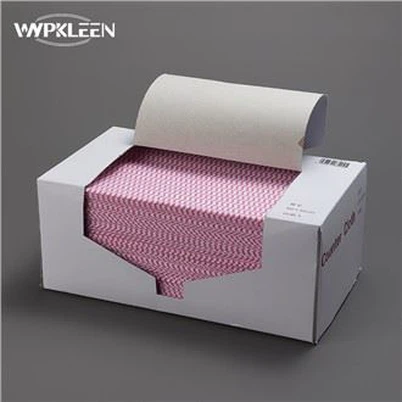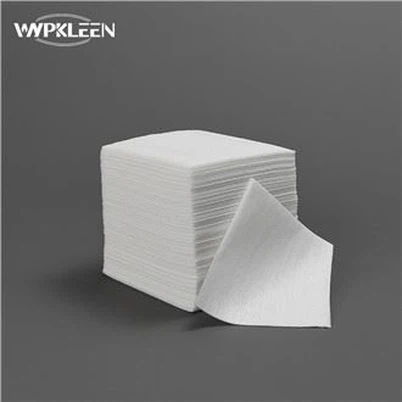


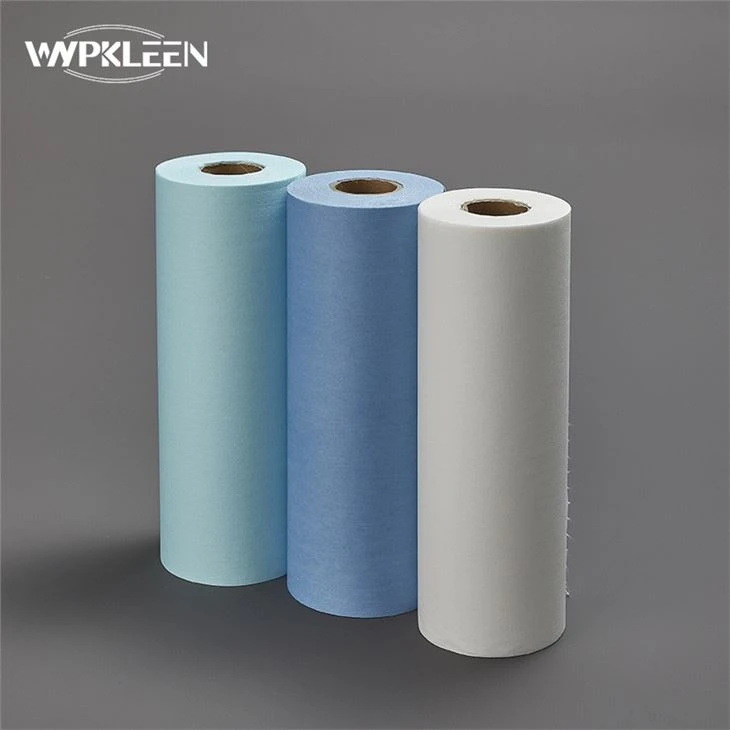


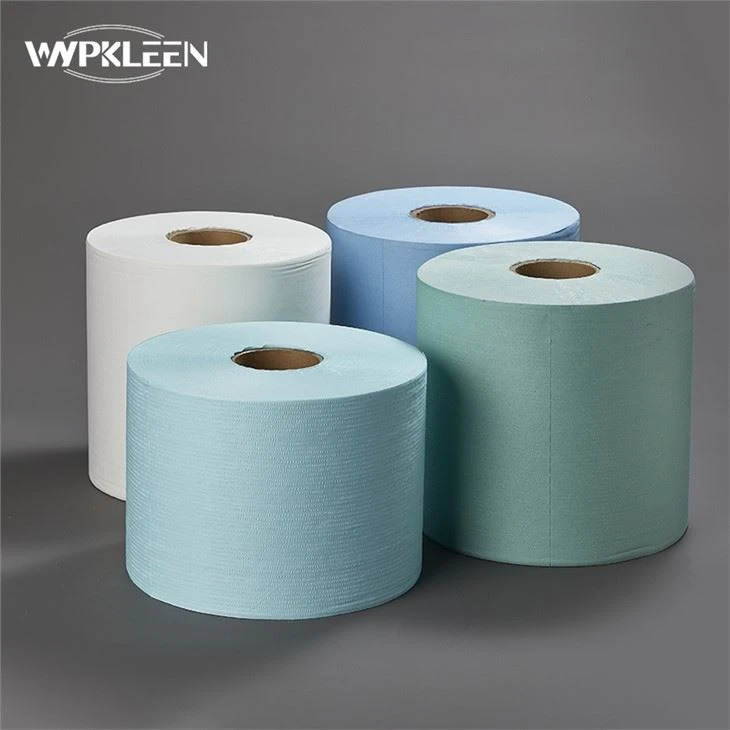
Spunlace Nonwoven Fabric Roll
Composition: Woodpulp & PP
Workable width: 10cm-210cm
Weight range: 35gsm-120gsm
Color: blue, red, green, orange
Description
What is Spunlace Nonwoven Fabric?
Spunlace Non Woven Fabric is a man-made fabric manufactured with a hydroentanglement process. The Spunlace Nonwoven Fabric is prepared using water jets, which gives it a pattern. The spunlace fabric is made with viscose (rayon), polyester, cotton, wood pulp etc.
Mainly it is made with viscose & polyester. The Spunlace Nonwoven Fabric Rolls width varies from 800 to 4800 millimetres.
Specification
|
Item |
Spunlace nonwoven fabric roll |
|
Composition |
Woodpulp & PP |
|
Workable width |
10cm-210cm |
|
Weight range |
35gsm-120gsm |
|
Color |
Blue, red, green, orange |
|
Application |
1. Furniture finishing |
Features:
- Spunlace nonwoven fabric roll is low lint, high strength, highly absorbent, and solvent-resistant.
- Spunlace nonwoven fabric roll raises the standard for general-purpose cloths at a great value. They don't use adhesives or binders, so they leave no residue behind, and they are reinforced for strength when wet or dry.
- Spunlace nonwoven fabric roll is composed of soft wood pulp combined with strong spunbond fabric. However, the two sides are different-one side has a scrubby, colorful texture, while the other side is absorbent and cloth-like.
- Its unique structure and composition ensure that the fabric dries quickly, staying clean and fresh for longer, providing optimal hygiene.
Classification & Types of Non Woven Fabric
A wide variety of nonwoven fabrics can be developed depending on the manufacturing process. Some types of nonwoven fabrics are discussed below:
Spun-Bonded Non Woven Fabric
Polymers are used to develop Spun-bonded nonwoven fabric. The polymer fibers are made to go through the extruder, stretching it to a continuous filament which is further spread evenly and laid in a web. The melting and spinning process results in an inter-tangled web of fibers. After chemical, heat, or mechanical treatment of the resulting web forms the final fabric.
Spunlace Non Woven Fabric
This unique nonwoven fabric gets its name from the fantastic process of its making, where high-pressure water jets are utilized to entangle and combine the web of multiple layers of fibers. The high pressure reinforces the threads, but the resulting yarn is not as strong as other nonwoven fabrics. Often fibers like silk, polyester, nylon, bamboo fibers, wood pulp, viscose fibers are used to develop Spunlace, which is used to manufacture disposable surgical gowns, filters, face masks, wet wipes, etc.
Heat Bounded Non Woven Fabric
The primary binding process for this nonwoven fabric is heated. The fiber webs are taken together with adhesives and treated with high heat. The bonds in the layers of fibers get melted by applying heat. On cooling, the web of fibers gets combined into a single nonwoven fabric.
Melt-blown Non Woven Fabric
A complex, systematic process is adopted to develop and manufacture melt-blown nonwoven fabric. The melted polymer fiber is extruded through a die with hundreds of tiny holes in it. The holes are the dimensions of the resulting fibers. Hot air is blown over the threads to cool them, and the fiber webs are collected on a collector screen. It is here that the fibers combine to form the nonwoven fabric.
Wet Non Woven Fabric
The raw material that is the fibers are placed in an aqueous medium. It helps the fibers to unfurl into single fiber strands. Different types of fibrous raw material are added to the suspended fibrous mass to form a slurry. This slurry-like mass is treated to form the nonwoven fabric.
Stitch-Bonded Non Woven Fabric
This wrap knitted loop structure nonwoven fabric gains strength from its layers, reinforcing the structure of the final material, making it strong. The various layers include fiber web, yarn layer, etc.
Hydrophilic Nonwoven Fabric
The hydrophilic nonwoven fabric is used to manufacture sanitary material and other medical grade or surgical material. The material is soft to touch and sensitive to skin.
Production Process of Spunlace Nonwoven Fabric
The production of spunlace nonwovens requires a thorough understanding of the materials involved and advanced technical skills to operate modern production equipment.
The type of fibers used and the specific process parameters can be adjusted to create spunlace nonwoven fabrics with different properties. For example, fabrics with a high percentage of synthetic fibers will be stronger and more durable, while those with a higher percentage of natural fibers will be softer and more absorbent.
1. Procurement of Raw Materials
Our primary raw materials include rayon, polyester, and other staple fibers, sourced from reputable manufacturers. These materials are compressed and packaged in batches weighing 200 to 300 kg, with the option to blend fibers to meet specific property requirements.
2. Mixing and Loosening Fibers
The compressed fibers are meticulously loosened and mixed to ensure a consistent blending ratio and weight distribution, setting the foundation for subsequent processes like carding.
3. Carding Process
The fibers are then transformed into a sheet-like form known as a "web" through a series of rolls equipped with tooth-shaped metal wires. The uniformity of this web is crucial in the carding process, showcasing our advanced technological capabilities.
4. Fiber Bonding
Following carding, the fibers within the web are entangled using high-pressure water streams, creating a durable sheet with enhanced strength. The water pressure and speed of the jets are carefully adjusted to optimize the entanglement process.
5. Drying and Fusion Bonding
We employ a drying method to remove moisture from the sheet and achieve fusion bonding of heat-fusion fibers in a sheath-core structure, further enhancing the fabric's integrity. This can be done through various techniques, such as hot air ovens or infrared radiation.
6. Quality Inspection
Every nonwoven fabric undergoes a rigorous inspection process post-drying to identify and address any potential contaminants, ensuring a pristine final product.
7. Winding and Packaging
Upon successful completion of the inspection phase, the sheets are wound into rolls of various widths and lengths, facilitating efficient packaging and distribution.
8. Finishing Treatments
The finished fabric is treated with various finishes, such as softeners and antimicrobial agents, to enhance its properties.
Factors to Consider When Choosing Non-Woven Fabric Rolls
Selecting the right type of non-woven fabric roll for your project requires careful consideration of several key factors:
Grammage (GSM)
GSM, or grams per square meter, is a crucial factor that determines the weight and thickness of the non-woven fabric roll. A higher GSM indicates a heavier and more durable fabric, while a lower GSM signifies a lighter and more delicate material. The appropriate GSM depends on the intended application.
Material Composition
Non-woven fabric rolls can be made from various materials, including polypropylene, polyester, nylon, and natural fibers like cotton and bamboo. The material composition significantly influences the fabric's properties, such as strength, softness, and breathability.
Surface Texture
Non-woven fabric rolls come in a range of surface textures, from smooth and silky to rough and textured. The surface texture affects the fabric's appearance and functionality. For instance, a smooth surface is ideal for printing or lamination, while a textured surface provides better grip and cushioning.
Color and Pattern
Non-woven fabric rolls are available in a vast array of colors and patterns, allowing you to match your project's specific aesthetic requirements. Solid colors, vibrant prints, and intricate designs are all available to suit your creative vision.
Applications
The intended application plays a pivotal role in determining the type of non-woven fabric roll you need. Common applications include:
- Garment Manufacturing: Non-woven fabrics are used in disposable clothing, medical gowns, and protective suits.
- Bag Making: Non-woven fabric rolls are widely used in the production of shopping bags, tote bags, and promotional bags.
- Medical and Hygiene: Non-woven fabrics find applications in surgical gowns, drapes, and disposable wipes.
- Industrial Applications: Non-woven fabrics are employed in filtration, insulation, and packaging materials.
- Home Furnishings: Non-woven fabrics are utilized in curtains, upholstery, and bedding products.
How To Check Spunlace Fabric Quality?
Some customers told us that they received a wrong or lower quality spunlace non woven fabric. Then how do you check you received the right quality spunlace fabric? It is easy to test by the lab or costs money to by a 3rd party to do that. But here we show you the way to test in very easy way which you do by yourself.
The most important for spunlace fabric is its composition, as viscose fibers is usually more expensive than polyester fiber, viscose made the spunlace better absorbent and higher quality for wiping.
The most easy way to test the blend of viscose & polyester is burned the fabric
See the fabric after burned:
You can see the obvious difference during the burning.
More polyester the fabric will burn more quick and it is not easy to exterminate.After burning, there is a black induration. But 100% viscose after burning it is only gray,no induration. So burn faster and more induration, then the fabric contains more polyester.
We are the professional spunlace non woven manufacturer, we produce various of different spunlace fabric for customer requirement. Please contact us for your spunlace offers. Our website is nonwoven-wipes.com.
Our Service:
- Providing testing and certification as required.
- Offering OEM and ODM services.
- Providing professional packaging or customized packaging.
- Offering a 6-month quality assurance.
FAQ
Q: Is it possible to offer samples?
Q: Do you accept custom orders?
Q: What's your MOQ?
Q: Can I place a mixed order?
Q: How does your factory manage quality control?
Q: What is your company's production capacity?
Q: What is Nonwoven Fabric Definition?
Q: What is Spunlace Non Woven Fabric Meaning?
Q: Is Spunlace Non Woven Fabric Biodegradable?
Q: What is spunlace fabric made of?
Q: What is the raw material for non woven fabric?
Q: What is GSM?
For example, let's say we have a piece of fabric that is 1 meter by 1 meter. Weighing this fabric would give us its GSM. If the fabric weighs 80 grams, then its GSM would be 80 g/m2.
No matter the size of the material, whether big or small, as long as you know its dimensions and weight, you can calculate its GSM.
Q: What is the difference between spunbond and spunlace?
Q: Is spunlace lint free?
Q: What is spunlace fabric used for?
Q: What is lint free mean?
Q: What is the greatest advantage of non-woven fabric?
Q: What is the spun lace nonwoven process?
A high-pressure liquid stream is performed on the drylaid web, a nonwoven fabric is formed by entangling the staple fiber. Organize fibers by carding. Form a drylaid web. Staple fibers are entangled together by high-pressure liquid stream and form a nonwoven fabric.
Hot Tags: spunlace nonwoven fabric roll, China spunlace nonwoven fabric roll manufacturers, suppliers, factory, , , , Spunlace Nonwoven Fabric Roll, Woodpulp Polyester Spunlace Nonwoven Fabric
Send Inquiry
You Might Also Like