
Are airlaid paper wipes resistant to tearing?
Leave a message

Are airlaid paper wipes resistant to tearing?
As a supplier of Airlaid Paper Wipes, I've encountered numerous inquiries regarding the tear - resistance of these products. This characteristic is of utmost importance, as it directly impacts the usability and effectiveness of the wipes in various applications. In this blog, I'll delve into the details of airlaid paper wipes' tear - resistance, exploring what factors contribute to it and how it measures up in real - world scenarios.
Understanding Airlaid Paper
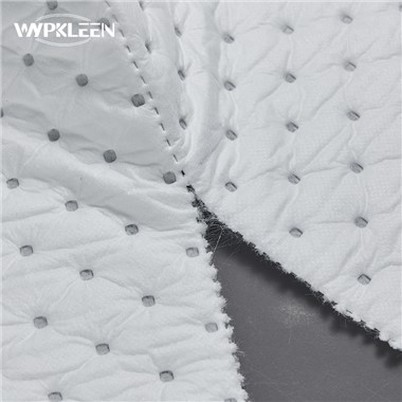
Before we discuss tear - resistance, it's essential to understand what airlaid paper is. Airlaid paper is a non - woven material produced through a unique manufacturing process. Unlike traditional papermaking, which involves wet - laying fibers, airlaid papermaking distributes fibers in a dry state using air currents. The fibers are then bonded together through various methods such as thermal bonding, latex bonding, or a combination of both. This results in a material with distinct properties compared to ordinary paper or other non - woven fabrics. To learn more about airlaid paper, you can visit Nonwoven Airlaid Paper.
Factors Affecting Tear - Resistance
Fiber Type
The type of fibers used in airlaid paper wipes plays a crucial role in determining their tear - resistance. Natural fibers like cellulose are commonly used, and they offer a good balance of strength and absorbency. Synthetic fibers, on the other hand, can enhance tear - resistance significantly. For example, polyester fibers are known for their high tensile strength. When blended with cellulose fibers, they can reinforce the structure of the airlaid paper, making it more resistant to tearing. Our manufacturing process carefully selects and blends fibers to optimize the tear - resistance of our Airlaid Paper Wipe.
Fiber Orientation
The orientation of fibers within the airlaid paper also affects tear - resistance. In a well - formed airlaid paper, the fibers are randomly oriented. This randomness distributes stress evenly across the material when it is subjected to tearing forces. If the fibers were oriented in a single direction, the paper would be more likely to tear along that direction. Advanced manufacturing techniques are employed to ensure a high degree of random fiber orientation in our airlaid paper wipes, enhancing their overall tear - resistance.
Bonding Method
The method used to bond the fibers together is another key factor. Thermal bonding, where heat is applied to melt and fuse the fibers, can create a strong bond that contributes to tear - resistance. Latex bonding, which involves applying a latex adhesive to the fibers, can also enhance the strength of the airlaid paper. However, the choice of bonding method depends on the specific requirements of the wipes. For example, in applications where a soft and flexible wipe is needed, a more delicate bonding method may be used, which could slightly affect tear - resistance but improve other properties such as comfort.
Real - World Performance
In real - world applications, the tear - resistance of airlaid paper wipes is put to the test. These wipes are used in a wide range of industries, including healthcare, food service, and industrial cleaning.


Healthcare
In healthcare settings, airlaid paper wipes are used for tasks such as patient care, instrument cleaning, and surface disinfection. They need to be strong enough to withstand repeated use without tearing, especially when cleaning hard - to - reach areas or applying pressure during disinfection. Our airlaid paper wipes have been rigorously tested in healthcare facilities and have proven to be highly resistant to tearing, ensuring reliable performance in critical situations.
Food Service
In the food service industry, airlaid paper wipes are used for cleaning countertops, utensils, and spills. They come into contact with various substances, including water, oils, and food residues. Despite these challenging conditions, our wipes maintain their tear - resistance, allowing for efficient and hygienic cleaning. The ability to resist tearing also reduces the risk of lint or paper particles being left behind on surfaces, which is crucial for maintaining food safety standards.
Industrial Cleaning
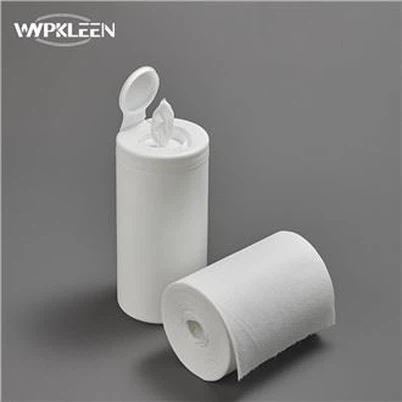
Industrial cleaning often involves heavy - duty tasks, such as removing grease, dirt, and grime from machinery and equipment. Airlaid paper wipes used in these applications need to be extremely strong. Our Multipurpose Paper Wipe Roll is designed to meet the demands of industrial cleaning. It has a high tear - resistance, enabling it to handle tough cleaning jobs without falling apart.
Comparing with Other Wipe Materials
When compared to other wipe materials, such as traditional paper towels or woven fabric wipes, airlaid paper wipes offer several advantages in terms of tear - resistance.
Traditional Paper Towels
Traditional paper towels are typically made from wood pulp and are wet - laid. They are often less tear - resistant than airlaid paper wipes. This is because the wet - laying process can result in a more ordered fiber structure, making the paper more prone to tearing along the grain. In addition, airlaid paper wipes can be engineered with specific fiber blends and bonding methods to enhance their tear - resistance, which is not as easily achievable with traditional paper towels.
Woven Fabric Wipes
Woven fabric wipes are generally strong and durable. However, they can be more expensive to produce and may not offer the same level of absorbency as airlaid paper wipes. Airlaid paper wipes provide a cost - effective alternative with comparable tear - resistance in many applications. They are also more disposable, which is an advantage in situations where hygiene is a top priority.
Conclusion
In conclusion, airlaid paper wipes can be highly resistant to tearing, thanks to factors such as fiber type, fiber orientation, and bonding method. Their tear - resistance makes them suitable for a wide range of applications in different industries. Whether it's in healthcare, food service, or industrial cleaning, airlaid paper wipes offer reliable performance.
If you're in the market for high - quality airlaid paper wipes with excellent tear - resistance, we'd love to hear from you. Contact us to discuss your specific requirements and explore how our products can meet your needs.
References
- "Nonwoven Fabric Handbook" by H. - P. Fuchs, et al.
- "The Science of Papermaking" by James P. Casey.