
Can Scrim Reinforced Paper be used for curved surfaces?
Leave a message

Hey there! I'm a supplier of Scrim Reinforced Paper, and I often get asked this question: "Can Scrim Reinforced Paper be used for curved surfaces?" Well, let's dive right into it and find out.
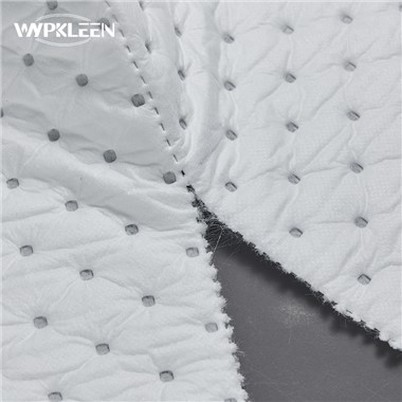
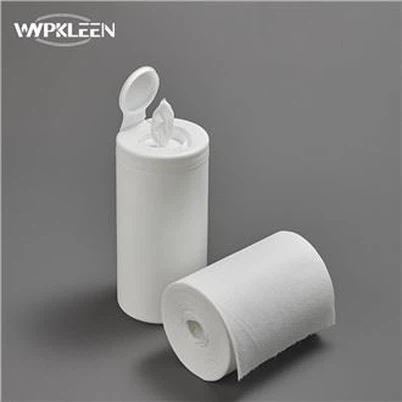
First off, let me give you a bit of background on Scrim Reinforced Paper. It's a pretty cool material that combines the strength of a scrim (usually a woven or non - woven fabric) with the flexibility and usability of paper. This combination makes it stronger and more durable than regular paper. You can check out our Reinforced Poly Scrim Paper Roll and Industrial Paper Towel Roll to see some of our products in action.
Now, back to the main question. The short answer is yes, Scrim Reinforced Paper can be used for curved surfaces, but there are a few factors to consider.
Flexibility and Adaptability
One of the key features of Scrim Reinforced Paper is its flexibility. The scrim component gives it the ability to bend and conform to different shapes without tearing easily. This means that when you're dealing with a curved surface, the paper can adapt to the curve to a certain extent. For example, if you're wrapping a cylindrical object like a pipe or a small container, the Scrim Reinforced Paper can be wrapped around it smoothly.
However, the degree of curvature matters. If the curve is too sharp, the paper might have trouble conforming. In cases where the radius of the curve is very small, there's a risk that the paper could wrinkle or even tear at the edges. But for gentle curves, like those on the surface of a large - diameter pipe or a rounded furniture piece, the paper should work just fine.
Adhesion
Another important aspect is how well the Scrim Reinforced Paper adheres to the curved surface. If you're using the paper for a wrapping or covering purpose, you'll want it to stay in place. In most cases, you can use an adhesive to attach the paper to the surface. There are different types of adhesives available, such as spray adhesives, glue sticks, or double - sided tapes.


The choice of adhesive depends on the surface material and the environment. For example, if the curved surface is made of plastic, a plastic - compatible adhesive would be a good choice. If it's a metal surface, an adhesive with good metal - bonding properties should be used. When applying the adhesive, make sure to spread it evenly on the surface or the back of the paper to ensure a strong and uniform bond.
Surface Texture
The texture of the curved surface also plays a role. If the surface is smooth, the Scrim Reinforced Paper is more likely to adhere well and conform neatly. But if the surface is rough or porous, it might be a bit more challenging. The roughness can cause the paper to catch on the bumps, making it difficult to get a smooth finish. In such cases, you might need to prepare the surface first. You could sand it down to make it smoother or use a primer to fill in the pores.
Applications on Curved Surfaces
There are many practical applications where Scrim Reinforced Paper can be used on curved surfaces.
Packaging
In the packaging industry, it's common to use Scrim Reinforced Paper to wrap irregularly shaped or curved products. For example, when packaging glassware with curved edges, the paper can provide a protective layer. It helps prevent scratches and damage during transportation. The strength of the scrim ensures that the paper doesn't tear easily, even if the package is jostled around.
Decorative Purposes
If you're into DIY projects or interior design, Scrim Reinforced Paper can be a great material for adding a decorative touch to curved surfaces. You could use it to cover the curved parts of furniture, like the arms of a chair or the edges of a table. With its wide range of colors and patterns available, you can create a unique and stylish look.
Industrial Insulation
In industrial settings, Scrim Reinforced Paper can be used for insulation on curved pipes. It can be wrapped around the pipes to provide a layer of thermal insulation. The flexibility of the paper allows it to conform to the shape of the pipes, ensuring that there are no gaps where heat could escape.
Limitations
While Scrim Reinforced Paper has many advantages when it comes to curved surfaces, there are some limitations.
Thickness and Rigidity
If the Scrim Reinforced Paper is too thick or rigid, it will be less flexible and more difficult to conform to tight curves. Thicker papers are generally stronger, but they sacrifice some of their ability to bend around sharp corners. So, when choosing the right paper for a curved surface application, you need to balance strength and flexibility.
Environmental Conditions
The environment in which the paper is used can also affect its performance on curved surfaces. For example, if the surface is exposed to high humidity or extreme temperatures, the paper might expand, contract, or lose its adhesion. In a humid environment, the paper could absorb moisture, which might make it softer and less able to hold its shape on the curved surface. On the other hand, in very cold temperatures, the paper could become brittle and more prone to cracking.
Tips for Using Scrim Reinforced Paper on Curved Surfaces
Here are some tips to help you get the best results when using Scrim Reinforced Paper on curved surfaces:
- Choose the Right Paper: Select a Scrim Reinforced Paper with the appropriate thickness and flexibility for the degree of curvature you're dealing with. Thinner papers are usually more flexible but might be less strong, while thicker papers offer more strength but less flexibility.
- Prepare the Surface: As mentioned earlier, make sure the surface is clean, dry, and smooth. Remove any dirt, grease, or debris that could affect the adhesion of the paper.
- Test First: Before applying the paper to the entire curved surface, do a small test on a hidden area. This will help you see how well the paper conforms and adheres, and you can make any necessary adjustments.
- Use the Right Tools: You might need some tools to help you apply the paper evenly. A roller can be useful for smoothing out the paper and removing any air bubbles.
Conclusion
So, to sum it up, Scrim Reinforced Paper can definitely be used for curved surfaces in many cases. Its flexibility, strength, and adaptability make it a versatile material for various applications. However, you need to consider factors like the degree of curvature, adhesion, surface texture, and environmental conditions. By taking these factors into account and following the tips I've mentioned, you can achieve great results when using Scrim Reinforced Paper on curved surfaces.
If you're interested in using Scrim Reinforced Paper for your curved - surface projects, I'd love to talk to you. Whether you have a specific application in mind or just want to learn more about our products, feel free to reach out. We can discuss your requirements and help you find the right Scrim Reinforced Paper solution for your needs.
References
- "Flexible Packaging Materials: Properties and Performance" - A comprehensive guide on the properties of different packaging materials, including Scrim Reinforced Paper.
- "Adhesives for Industrial Applications" - This resource provides information on different types of adhesives and their suitability for various surfaces.