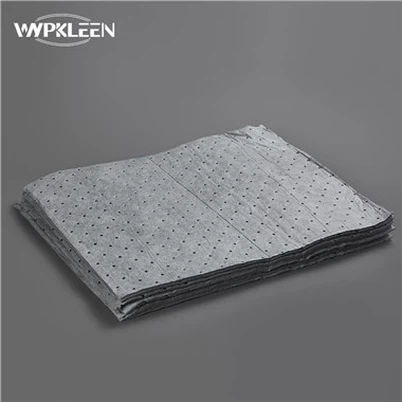

How do I measure the absorption of a medical absorbent pad?
Leave a message

Hey there! As a supplier of Medical Absorbent Pads, I often get asked about how to measure the absorption of these pads. It's a crucial aspect, whether you're a healthcare provider looking for the best product or just curious about the science behind it. In this blog, I'll share some practical ways to measure the absorption of medical absorbent pads, and also give you a bit of background on different types of pads we offer.
First off, let's talk about why measuring absorption is so important. In a medical setting, absorbent pads are used for all sorts of things like collecting bodily fluids, preventing spills, and keeping patients dry and comfortable. If a pad doesn't absorb enough, it can lead to leaks, which are not only messy but can also cause skin irritation and increase the risk of infection. On the other hand, if a pad absorbs too much, it might be over - engineered and more expensive than necessary. So, getting an accurate measure of absorption helps in choosing the right product for the job.
Types of Medical Absorbent Pads
We offer a variety of medical absorbent pads, each with its own unique properties. For example, our Oil Only Laminated Sorbent Pad is great for situations where you need to deal with oil - based substances. It's designed to repel water and only absorb oil, which is super useful in some medical procedures where oil might be present.
Then there's our Cotton Absorbent Pad. Cotton is a natural material, and these pads are soft and gentle on the skin. They're often used for things like wound care, where you want a pad that can absorb fluids without causing any irritation.
And our Absorbent Mats for Oil are larger in size and can cover a bigger area. They're perfect for spills in a medical laboratory or a surgical suite.


Measuring Absorption: The Basics
There are a few different methods to measure the absorption of a medical absorbent pad. One of the simplest ways is the gravimetric method. Here's how it works:
-
Weigh the dry pad: First, you need to weigh the pad before you start the absorption test. Use a precise scale, like a digital one, to get an accurate weight. Let's say the dry weight of the pad is (W_d).
-
Immerse the pad: Take the pad and immerse it in the fluid you want to test. In a medical context, this could be saline solution, which mimics bodily fluids. Make sure the pad is fully submerged for a set period of time. Usually, we recommend leaving it in for about 5 minutes to ensure it reaches its maximum absorption capacity.
-
Drain the excess fluid: After the 5 - minute mark, carefully remove the pad from the fluid. Let it drain for a short while to get rid of any excess fluid that's just sitting on the surface. You don't want this extra fluid to skew your results.
-
Weigh the wet pad: Once the excess fluid has drained, weigh the pad again. Let's call this weight (W_w).
-
Calculate the absorption: The amount of fluid absorbed by the pad is simply the difference between the wet weight and the dry weight, i.e., (A = W_w - W_d). You can then express this as a percentage of the dry weight to get a better understanding of the pad's absorption efficiency. The formula for the absorption percentage is (\text{Absorption}%=\frac{W_w - W_d}{W_d}\times100)
Factors Affecting Absorption
There are several factors that can affect the absorption of a medical absorbent pad. One of the main factors is the material of the pad. Different materials have different absorption capacities. For example, synthetic materials might absorb fluids faster than natural materials, but they might not hold as much in the long run.
The thickness of the pad also plays a role. Thicker pads generally have a higher absorption capacity because they have more material to soak up the fluid. However, they might also be bulkier and less comfortable for the patient.
The type of fluid being absorbed is another important factor. Bodily fluids can vary in their viscosity and composition. For example, blood is thicker than urine, so a pad might absorb urine more easily than blood.
Advanced Measuring Techniques
If you want a more accurate and detailed measurement, there are some advanced techniques available. One such technique is the pressure - driven flow method. In this method, you use a device to apply a controlled pressure to the fluid while it's being absorbed by the pad. This simulates the real - world conditions where there might be some pressure on the pad, like when a patient is lying on it.
Another technique is the capillary rise method. This method measures how high the fluid rises in the pad due to capillary action. Capillary action is the ability of a fluid to flow in narrow spaces without the assistance of, or even in opposition to, external forces like gravity. By measuring the height of the fluid rise, you can get an idea of how well the pad can draw in the fluid.
Quality Control and Standards
As a supplier, we take quality control very seriously. We test all our medical absorbent pads to make sure they meet the industry standards. These standards are in place to ensure the safety and effectiveness of the products. For example, there are standards regarding the amount of fluid a pad should be able to absorb within a certain time frame.
We also conduct regular internal tests to monitor the consistency of our products. This helps us maintain a high level of quality and ensure that every pad we supply performs as expected.
Conclusion
Measuring the absorption of medical absorbent pads is an important process that helps in choosing the right product for different medical applications. Whether you're using the simple gravimetric method or more advanced techniques, it's crucial to understand the factors that affect absorption and how to get accurate results.
If you're in the market for medical absorbent pads, we've got a wide range of products to choose from. Our Oil Only Laminated Sorbent Pad, Cotton Absorbent Pad, and Absorbent Mats for Oil are all high - quality options that have been tested for optimal absorption.
If you're interested in learning more about our products or have any questions about absorption measurement, feel free to reach out. We're always happy to help you find the best solution for your needs. Let's start a conversation about your medical absorbent pad requirements and see how we can work together!
References
- ASTM International. Standard test methods for evaluating the absorbency of nonwoven fabrics.
- ISO standards related to medical absorbent products.