

How do oil absorbent sheets compare to oil - absorbing socks?
Leave a message

As an oil absorbent sheet supplier, I've witnessed firsthand the diverse needs of industries dealing with oil spills and leaks. These scenarios call for effective solutions to manage and clean up oil efficiently. Two popular options in the market are oil absorbent sheets and oil-absorbing socks. In this blog, I'll compare these two products, highlighting their features, applications, and performance to help you make an informed decision for your oil cleanup needs.
Understanding Oil Absorbent Sheets
Oil absorbent sheets are thin, flat materials designed to soak up oil quickly. They are typically made from materials like polypropylene, which has excellent oil absorption properties. These sheets are highly versatile and can be used in a variety of settings, from industrial workshops to automotive garages.
One of the key advantages of oil absorbent sheets is their ease of use. They can be laid directly on the oil spill, and their large surface area allows for rapid absorption. The sheets are also lightweight and easy to handle, making them ideal for quick cleanup operations. Additionally, they can be cut to size, providing flexibility in different spill scenarios.

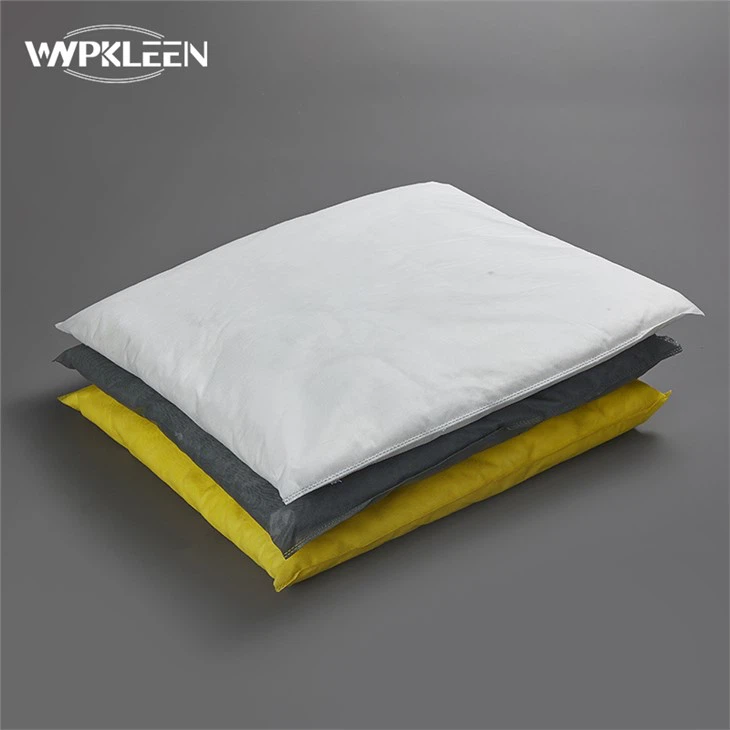
Another benefit is their cost-effectiveness. Oil absorbent sheets are generally more affordable than other oil cleanup products, making them a popular choice for budget-conscious businesses. They are also available in bulk, which can further reduce the cost per unit.
In terms of performance, oil absorbent sheets can absorb a significant amount of oil relative to their weight. They are designed to repel water, which means they can be used in wet environments without losing their effectiveness. This makes them suitable for use in marine applications, as well as in areas where water and oil are present together.
Oil absorbent sheets have a wide range of applications. In industrial settings, they are used to clean up oil spills on factory floors, machinery, and equipment. They can also be used in automotive workshops to soak up oil leaks from cars and trucks. In the food industry, they are used to absorb oil and grease from cooking surfaces and equipment. Additionally, they can be used in environmental cleanup operations to remove oil from water surfaces.
For more information on related absorbent products, you can check out Medical Absorbent Pad, Cotton Absorbent Pad, and Chemical Absorbent Pad.
Exploring Oil-Absorbing Socks
Oil-absorbing socks, on the other hand, are tubular-shaped products filled with absorbent material. They are designed to contain and absorb oil spills along the edges or perimeters of an area. These socks are typically made from the same materials as oil absorbent sheets, such as polypropylene.
One of the main advantages of oil-absorbing socks is their ability to create a barrier around an oil spill. They can be placed around the perimeter of a spill to prevent it from spreading further. This is particularly useful in situations where the spill is large or where there is a risk of the oil spreading to other areas.
Oil-absorbing socks are also highly durable. They can withstand rough handling and can be reused multiple times, depending on the extent of the contamination. This makes them a cost-effective option in the long run, especially for businesses that deal with frequent oil spills.
In terms of absorption capacity, oil-absorbing socks can hold a large amount of oil. They are designed to absorb oil from the surface as well as from the sides, which allows them to soak up more oil compared to some other absorbent products. However, their absorption rate may be slower than that of oil absorbent sheets due to their tubular shape.
Oil-absorbing socks are commonly used in industrial settings to contain oil spills in areas such as storage yards, loading docks, and parking lots. They can also be used in environmental cleanup operations to prevent oil from reaching sensitive areas, such as water bodies or wildlife habitats. In addition, they are used in marine applications to contain oil spills on ships and boats.
Comparing Oil Absorbent Sheets and Oil-Absorbing Socks
Absorption Speed
Oil absorbent sheets generally have a faster absorption speed compared to oil-absorbing socks. Their large surface area allows them to come into contact with a greater amount of oil at once, resulting in quicker absorption. This makes them a better choice for small, immediate spills where fast cleanup is required.
On the other hand, oil-absorbing socks may take longer to absorb oil due to their tubular shape. However, they are more effective at containing spills and preventing them from spreading, which can be crucial in larger spill scenarios.
Absorption Capacity
In terms of absorption capacity, oil-absorbing socks can hold a larger volume of oil compared to oil absorbent sheets. Their tubular design allows them to absorb oil from multiple directions, which increases their overall capacity. This makes them a better choice for larger spills or for situations where a high level of absorption is required.
However, oil absorbent sheets can still absorb a significant amount of oil relative to their weight. They are also more suitable for spills that are spread out over a large area, as they can cover a greater surface area.
Containment
Oil-absorbing socks are specifically designed for containment. They can be placed around the perimeter of a spill to prevent it from spreading, which is essential in preventing environmental damage and reducing cleanup costs. This makes them a valuable tool in situations where the spill is large or where there is a risk of the oil reaching sensitive areas.
Oil absorbent sheets, while they can be used to contain small spills, are not as effective as oil-absorbing socks in preventing the spread of larger spills. However, they can be used in combination with oil-absorbing socks to provide a more comprehensive cleanup solution.
Versatility
Oil absorbent sheets are more versatile than oil-absorbing socks in terms of their application. They can be used in a wide range of settings and for various types of spills, including small and large spills, as well as spills on different surfaces. They can also be cut to size, which allows for greater flexibility in different spill scenarios.
Oil-absorbing socks, on the other hand, are more specialized in their use. They are primarily used for containment and are most effective in situations where spills are concentrated in a specific area.
Cost
Oil absorbent sheets are generally more affordable than oil-absorbing socks. They are available in bulk at a lower cost per unit, which makes them a cost-effective option for businesses with a limited budget. Additionally, their lightweight and easy-to-handle nature reduces transportation and storage costs.
Oil-absorbing socks, while they may be more expensive upfront, can be reused multiple times, which can offset their higher cost in the long run. However, the cost of cleaning and maintaining the socks should also be considered.
Making the Right Choice
The choice between oil absorbent sheets and oil-absorbing socks depends on several factors, including the size and nature of the spill, the location of the spill, and the budget available.
For small, immediate spills where fast cleanup is required, oil absorbent sheets are the better choice. Their fast absorption speed and versatility make them ideal for quick and easy cleanup operations.
For larger spills or spills that require containment, oil-absorbing socks are a better option. Their ability to create a barrier around the spill and their high absorption capacity make them effective in preventing the spread of oil and reducing cleanup costs.
In some cases, a combination of both oil absorbent sheets and oil-absorbing socks may be the most effective solution. For example, oil absorbent sheets can be used to clean up the initial spill, while oil-absorbing socks can be used to contain any remaining oil and prevent it from spreading further.
Conclusion
Both oil absorbent sheets and oil-absorbing socks are valuable tools in the fight against oil spills. Each product has its own unique features and advantages, and the choice between them depends on the specific needs of the situation. As an oil absorbent sheet supplier, I understand the importance of providing effective and reliable solutions for oil cleanup. Whether you need oil absorbent sheets, oil-absorbing socks, or a combination of both, I can help you find the right product for your needs.
If you're interested in learning more about our oil absorbent products or would like to discuss your specific requirements, please don't hesitate to contact me. I'm here to assist you in making the best decision for your oil cleanup needs.
References
- "Oil Spill Cleanup Technologies." Environmental Protection Agency.
- "Absorbent Materials for Oil Spill Cleanup." Journal of Hazardous Materials.
- "Best Practices for Oil Spill Response." National Oceanic and Atmospheric Administration.


