

How do oil absorbent sheets work in oil - contaminated beach cleanup?
Leave a message

Oil spills on beaches are not only an environmental eyesore but also a significant threat to marine ecosystems. Among the numerous cleanup methods available, oil absorbent sheets have emerged as a practical and efficient solution. As a leading supplier of high - quality oil absorbent sheets, I'll take you through how these sheets work in oil - contaminated beach cleanup.

Understanding the Nature of Oil Spills on Beaches
Beaches are unique ecosystems that are constantly exposed to tides, waves, and human activities. When an oil spill occurs, the oil can quickly spread across the sand, seep into the pores, and contaminate the water along the shoreline. The type of oil involved can vary widely, from light crude oils that are more fluid and volatile to heavy fuel oils that are thick and sticky. Each type of oil presents different challenges for cleanup, and the effectiveness of oil absorbent sheets can be influenced by these characteristics.
The Composition of Oil Absorbent Sheets
Our oil absorbent sheets are typically made from materials that have a high affinity for oil and a low affinity for water. One of the most common materials used in our products is polypropylene. Polypropylene is a synthetic polymer that has excellent oil - absorbing properties. It is hydrophobic, which means it repels water while attracting oil molecules. You can learn more about our Polypropylene Absorbent Pad on our website.
In addition to polypropylene, we also offer Cotton Absorbent Pad. Cotton is a natural fiber that can absorb oil. It has the advantage of being biodegradable and environmentally friendly. However, compared to polypropylene, cotton may absorb a certain amount of water along with the oil, so it is more suitable for some less - severe oil - water mixture situations.
How Oil Absorbent Sheets Work
Capillary Action
The primary mechanism by which oil absorbent sheets work is capillary action. Capillary action is the ability of a liquid to flow in narrow spaces without the assistance of, or even in opposition to, external forces like gravity. The structure of our oil absorbent sheets is designed with numerous tiny pores and channels. When the sheet comes into contact with oil, the oil is drawn into these pores and channels, much like a sponge soaking up water.
The size and distribution of these pores are carefully engineered to optimize the absorption process. Smaller pores can provide a larger surface area for the oil to adhere to, while larger channels allow the oil to flow deeper into the sheet, increasing the overall absorption capacity.
Surface Tension and Adhesion
Surface tension is another factor at play. Oil has a certain surface tension, and the material of the absorbent sheet interacts with this surface tension to draw the oil onto its surface. The molecules of the oil are attracted to the molecules of the absorbent sheet through intermolecular forces such as van der Waals forces. Once the oil molecules come into contact with the sheet, they adhere to the surface, and as more oil is attracted, it gradually fills the pores and spaces within the sheet.
Selective Absorption
As mentioned earlier, our oil absorbent sheets are designed to be selective in what they absorb. The hydrophobic nature of polypropylene, for example, means that it does not form strong bonds with water molecules. Water molecules are polar, while the non - polar nature of polypropylene results in a repulsion between water and the sheet material. In contrast, the molecular structure of oil is more compatible with the polypropylene, allowing the sheet to preferentially absorb oil even in an oil - water mixture. This selective absorption is crucial in beach cleanup scenarios where the oil is often mixed with seawater.
Application of Oil Absorbent Sheets in Beach Cleanup
Initial Deployment
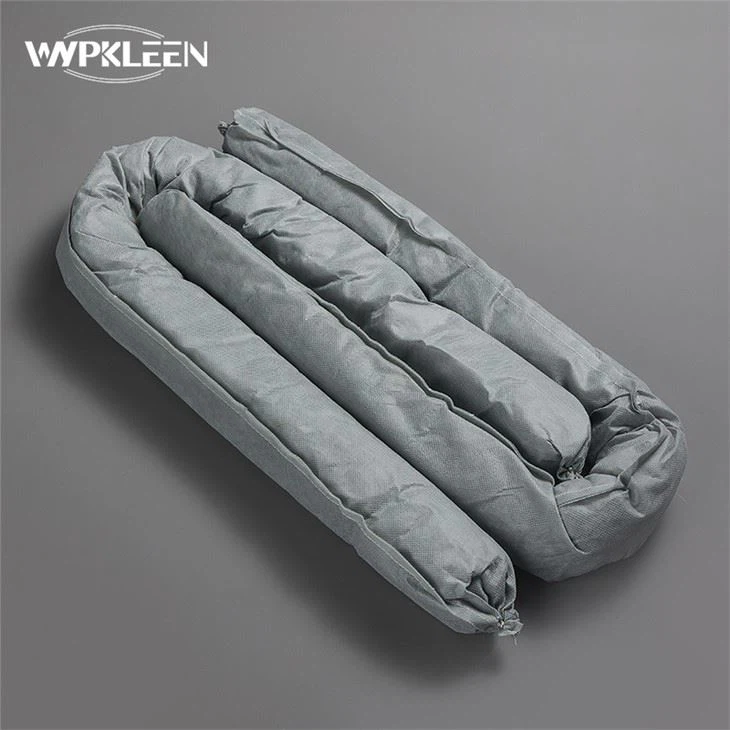
When responding to an oil spill on a beach, the first step is to quickly deploy the oil absorbent sheets. Our sheets are available in various sizes and forms, such as pads, rolls, or booms. For large - scale spills, rolls or booms can be used to contain the spread of the oil. They can be placed along the shoreline or around the perimeter of the spill to prevent the oil from spreading further.
Pads are more suitable for spot cleaning and for absorbing oil that has already seeped into the sand. Workers can simply place the pads on the contaminated areas, and the oil will be absorbed over time.
Monitoring and Replacement
After deployment, it is essential to monitor the absorbent sheets regularly. As the sheets absorb oil, they become saturated. A saturated sheet loses its ability to absorb more oil and may even release some of the absorbed oil back into the environment if it is disturbed. When a sheet is saturated, it should be replaced promptly with a new one.
We also offer Water Absorbent Pad which can be used in conjunction with oil absorbent sheets in some cases. For example, after the initial oil absorption, water absorbent pads can be used to remove any remaining water and further clean the beach area.
Recovery and Disposal
Once the cleanup operation is complete, the used absorbent sheets need to be recovered. The sheets are carefully collected to prevent any further contamination. Depending on the local regulations and the type of oil absorbed, the used sheets can be disposed of in an environmentally responsible manner. In some cases, the absorbed oil can be recovered from the sheets through processes like squeezing or centrifuging, which can reduce the amount of waste and potentially reuse the oil.
Advantages of Using Our Oil Absorbent Sheets in Beach Cleanup
Efficiency
Our oil absorbent sheets are highly efficient in absorbing oil. Their design and material composition ensure a rapid and high - capacity absorption process. This means that a large amount of oil can be removed from the beach in a relatively short period, minimizing the environmental impact of the spill.
Ease of Use
The sheets are easy to handle and deploy. They can be easily cut to the desired size and shape, and no special equipment is required for their application. This makes them a practical choice for beach cleanup operations, whether they are carried out by professional cleanup teams or local volunteers.
Environmental Friendliness
As mentioned earlier, we offer both synthetic and natural absorbent options. Our cotton absorbent pads are biodegradable, which means they will break down over time without causing long - term harm to the environment. Even our polypropylene products can be recycled in some cases, reducing the overall environmental footprint of the cleanup process.
Conclusion
Oil absorbent sheets play a crucial role in the cleanup of oil - contaminated beaches. Their unique working mechanisms, combined with their efficiency, ease of use, and environmental friendliness, make them an ideal choice for this challenging task. As a dedicated supplier of oil absorbent sheets, we are committed to providing high - quality products that meet the diverse needs of beach cleanup operations.
If you are involved in environmental cleanup projects and are interested in our oil absorbent sheets, we welcome you to reach out for a purchase negotiation. Our team of experts is ready to assist you in selecting the most suitable products for your specific requirements.
References
- Allen, D. T., & Shonnard, D. R. (2002). Green engineering: environmentally conscious design of chemical processes. Prentice Hall.
- Fingas, M. (2011). The behaviour of petroleum oils in the marine environment. CRC Press.
- Reddy, C. M., et al. (2012). The deepwater horizon oil spill in the gulf of mexico: a review of the environmental effects. Annual Review of Marine Science, 4, 371 - 395.


