
How do sorbent products interact with biological fluids?
Leave a message

Hey there! As a supplier of sorbent products, I've spent a ton of time thinking about how these nifty little items interact with biological fluids. It's not just a random question; it's super important for a whole bunch of applications, from medical stuff to environmental cleanup. So, let's dive right in and explore this topic.
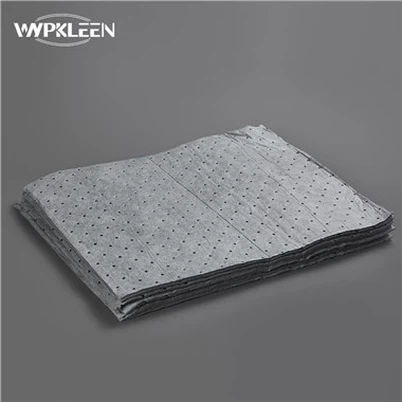
First off, what are sorbent products? Well, they're materials designed to soak up liquids. You've got different types, like Polypropylene Meltblown Oil Only Sorbent Socks and Oil Spill Absorbent Pad. These are great for dealing with oil spills, but they can also come into contact with biological fluids in certain situations.
When sorbent products interact with biological fluids, the first thing that happens is adsorption. This is like when a sponge soaks up water. The sorbent material has a lot of tiny pores and spaces. Biological fluids, which are mostly made up of water along with various proteins, cells, and other molecules, get drawn into these pores. It's kind of like a little party in there, where the fluid molecules find a cozy spot to hang out.
The nature of the sorbent material matters a whole lot. For example, if it's a hydrophobic sorbent (like the ones used in oil - only sorbents), it won't really mix well with the water - based part of biological fluids. But it can still interact with the lipid (fat) components in the fluid. On the other hand, a hydrophilic sorbent will have a stronger affinity for the water in the biological fluid and will soak it up more readily.
Let's talk about the medical side of things. In surgeries, sorbent products are used to soak up blood and other bodily fluids. This helps keep the surgical area clean and dry, which is crucial for a successful operation. The sorbent has to be biocompatible, meaning it won't cause any harm to the patient's body. If it's not, it could trigger an immune response, leading to inflammation or other complications.
In the environmental field, when dealing with spills that might involve biological fluids (like in a sewage spill), sorbent products play a key role. They can quickly soak up the fluid, preventing it from spreading and causing more damage. But again, the interaction has to be carefully considered. The sorbent needs to be able to handle the complex mixture of substances in the biological fluid, including bacteria and other microorganisms.
Now, how does the size of the sorbent particles affect the interaction? Smaller particles generally have a larger surface area. This means there are more places for the fluid molecules to attach. So, a sorbent with smaller particles will usually soak up the biological fluid faster. But it also has some drawbacks. Small particles can be more difficult to handle and might pose a risk of inhalation if they're not properly contained.
Another factor is the chemical composition of the sorbent. Some sorbents are treated with special chemicals to enhance their performance. For example, they might be treated to have a positive or negative charge. This can attract or repel certain molecules in the biological fluid. If the fluid has negatively charged molecules, a positively charged sorbent will have a stronger interaction with it.


Let's take a closer look at how the interaction affects the properties of the sorbent. Once it has soaked up the biological fluid, the sorbent can become heavier and bulkier. This can be a problem if it's being used in a situation where space is limited. Also, the presence of the fluid can change the mechanical properties of the sorbent. It might become softer or more brittle, depending on the type of fluid and the sorbent material.
In terms of long - term storage, the interaction with biological fluids can also be an issue. If the sorbent has absorbed a lot of fluid, it could start to break down over time. Bacteria in the fluid can cause decomposition of the sorbent material. This means that proper disposal is crucial. You can't just leave a used sorbent lying around, especially if it contains biological fluids.
Now, I want to talk about the research that's going on in this area. Scientists are constantly looking for new and better sorbent materials. They're trying to develop sorbents that are more efficient, more biocompatible, and more environmentally friendly. Some are even looking into using natural materials as sorbents, like cellulose from plants. These natural materials can be more sustainable and might have unique interactions with biological fluids.
In the lab, researchers use all sorts of techniques to study the interaction. They use microscopy to see how the fluid is distributed within the sorbent. They also use chemical analysis to figure out which components of the fluid are being absorbed and how. This research is really important because it helps us improve the performance of sorbent products.
So, as a supplier of sorbent products, I'm always keeping an eye on these interactions. I want to make sure that our products are the best they can be for our customers. Whether it's for medical use, environmental cleanup, or any other application, the interaction with biological fluids is at the heart of what we do.
If you're in the market for sorbent products, we've got a wide range of options to suit your needs. Whether you need Polypropylene Meltblown Oil Only Sorbent Socks for an oil spill or Oil Spill Absorbent Pad for a different type of cleanup, we can help. We're here to answer any questions you might have about how our products interact with biological fluids and to work with you to find the perfect solution.
If you're interested in learning more or want to start a procurement discussion, don't hesitate to reach out. We're always happy to talk about how our sorbent products can meet your specific requirements.
References:
- "Biomedical Applications of Sorbent Materials" - Journal of Biomedical Materials Research
- "Environmental Sorbent Technology" - CRC Press
- "Sorbent - Fluid Interactions: A Review" - International Journal of Chemical Engineering