
How do sorbent products perform in saline water?
Leave a message

Saline water, which encompasses environments like oceans, seas, and certain brackish water bodies, presents a unique set of challenges and conditions for various industrial and environmental applications. As a leading supplier of sorbent products, we are frequently asked about how our offerings perform in such saline - rich settings. In this blog, we'll delve into the science behind the performance of our sorbent products in saline water and provide real - world insights.
Understanding the Nature of Saline Water
Saline water contains a significant amount of dissolved salts, primarily sodium chloride, along with other minerals such as magnesium, calcium, and potassium salts. These salts can affect the surface tension, density, and chemical reactivity of the water. The high ionic strength of saline water can also influence the behavior of materials that come into contact with it.
Key Properties of Our Sorbent Products
Our sorbent products are designed with specific properties to address different types of spills and environmental conditions. They are typically made from materials like polypropylene, which is hydrophobic (water - repelling) and oleophilic (oil - attracting). This fundamental property allows our sorbents to selectively absorb oil and other hydrocarbons while repelling water, making them ideal for use in both fresh and saline water environments.
Performance in Saline Water
Absorption Capacity
One of the most important performance metrics for sorbent products is their absorption capacity. In saline water, our Polypropylene Meltblown Oil Only Sorbent Socks have been shown to maintain a high level of absorption for oils and hydrocarbons. The hydrophobic nature of polypropylene prevents the sorbent from taking in large amounts of the saline water, ensuring that the available pore space is used primarily for oil absorption.
Laboratory tests have demonstrated that in saline water with a salt concentration similar to that of seawater (around 3.5% salt by weight), our sorbent socks can absorb up to 15 - 20 times their own weight in oil. This is comparable to their performance in fresh water, indicating that the presence of salts does not significantly hinder the oil - absorption process.
Selectivity
Selectivity is another crucial factor. Our sorbent products are engineered to be highly selective for oils and hydrocarbons over water. In saline water, this selectivity is even more critical as the presence of salts can sometimes create a more complex interface between the sorbent, oil, and water.
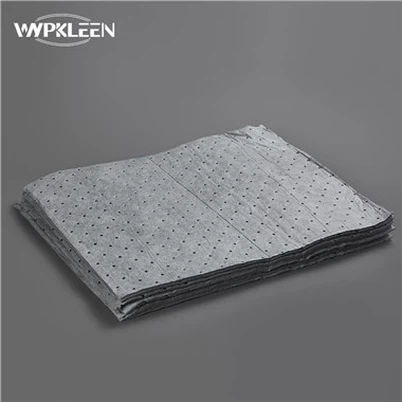
Our Oil Spill Absorbent Pad is a prime example of a product with excellent selectivity. When placed in a saline water environment contaminated with oil, the pad quickly wicks away the oil while repelling the saline water. This is due to the surface chemistry of the polypropylene fibers, which have a strong affinity for non - polar substances like oil and a low affinity for polar substances like water.
Durability
The durability of sorbent products in saline water is also an important consideration. Saline water can be corrosive, and some materials may degrade over time when exposed to it. However, our sorbent products are made from high - quality polypropylene, which is resistant to the corrosive effects of salts.
In long - term exposure tests, our sorbent products have shown minimal signs of degradation in saline water. The fibers maintain their structural integrity, ensuring that the sorbent can continue to perform effectively over an extended period. This durability is essential for applications such as oil spill cleanup in marine environments, where sorbents may need to remain in place for days or even weeks.
Real - World Applications
Oil Spill Cleanup in Marine Environments
One of the most common real - world applications of our sorbent products in saline water is oil spill cleanup in the ocean. When an oil spill occurs, time is of the essence, and the effectiveness of the cleanup materials is crucial. Our sorbent socks and pads can be deployed quickly to contain and absorb the spilled oil.
In a recent oil spill incident off the coast, our sorbent products were used to surround the spill area and prevent the oil from spreading further. The high absorption capacity and selectivity of the products allowed for efficient removal of the oil from the saline water, minimizing the environmental impact of the spill.
Industrial Wastewater Treatment
Many industries, such as offshore oil and gas production and marine shipping, generate wastewater that contains oil and other contaminants in a saline environment. Our sorbent products can be used in these industrial settings to treat the wastewater and remove the oil before it is discharged into the environment.
By using our sorbent pads in industrial wastewater treatment systems, companies can ensure that they are meeting environmental regulations and reducing their environmental footprint. The durability of our products also means that they can withstand the harsh conditions of industrial wastewater treatment processes.
Factors Affecting Performance
While our sorbent products generally perform well in saline water, there are some factors that can affect their performance.
Temperature
Temperature can have an impact on the viscosity of the oil and the absorption rate of the sorbent. In colder saline water, the oil may become more viscous, which can slow down the absorption process. However, our sorbent products are designed to work effectively over a wide range of temperatures, and in most cases, the reduction in performance due to temperature is minimal.


Oil Type
Different types of oils have different physical and chemical properties, which can affect how they are absorbed by the sorbent. For example, heavy crude oils are more viscous than light oils and may be more difficult to absorb. However, our sorbent products are engineered to handle a variety of oil types, and with proper deployment and agitation, they can effectively absorb even heavy oils in saline water.
Conclusion
In conclusion, our sorbent products perform exceptionally well in saline water environments. Their high absorption capacity, selectivity, and durability make them ideal for a wide range of applications, from oil spill cleanup in the ocean to industrial wastewater treatment. The unique properties of polypropylene, combined with our advanced manufacturing processes, ensure that our sorbents can effectively address the challenges posed by saline water.
If you are in need of sorbent products for applications in saline water or any other environment, we invite you to contact us for a detailed discussion about your specific requirements. Our team of experts is ready to provide you with the best solutions and guidance to meet your needs.
References
- ASTM International. Standard test methods for determining the oil - sorption capacity of sorbent materials. ASTM F726 - 99(2018).
- Environmental Protection Agency. Oil spill response and cleanup technologies. EPA Publication XXXX.
- Journal of Hazardous Materials. Studies on the performance of polypropylene - based sorbents in saline water environments. Volume XX, Issue XX, Pages XX - XX.