
How does airlaid paper perform in absorbing liquids?
Leave a message

Airlaid paper has emerged as a remarkable material in various industries, especially when it comes to liquid absorption. As a leading supplier of airlaid paper, I have witnessed firsthand its outstanding performance in this regard. In this blog, we will delve into how airlaid paper performs in absorbing liquids, exploring its unique properties, applications, and advantages.


The Structure and Properties of Airlaid Paper
Airlaid paper is a nonwoven material produced through a dry - forming process. It is made by dispersing cellulose fibers or a combination of cellulose and synthetic fibers in an air stream and then bonding them together using heat, chemical binders, or a combination of both. This manufacturing process results in a three - dimensional structure that is quite different from traditional papers.
One of the key properties of airlaid paper is its high porosity. The randomly arranged fibers create numerous voids and channels within the paper. These voids act as reservoirs for liquids, allowing airlaid paper to absorb a significant amount of liquid quickly. For example, in comparison to traditional woven fabrics, airlaid paper can absorb liquids more efficiently due to its open - structured design.
The capillary action of airlaid paper also plays a crucial role in liquid absorption. Capillary action is the ability of a liquid to flow in narrow spaces without the assistance of, or even in opposition to, external forces like gravity. The fine channels between the fibers in airlaid paper create strong capillary forces, which draw the liquid into the paper. This capillary action enables airlaid paper to wick liquids away from the surface, keeping it dry and preventing leakage.
Performance in Different Liquid Absorption Scenarios
Water Absorption
Water is one of the most common liquids that airlaid paper is used to absorb. In household cleaning applications, airlaid paper wipes, such as our Airlaid Paper Wipe, are highly effective at mopping up spills. The high porosity of airlaid paper allows it to quickly soak up large amounts of water. When a spill occurs, the paper can absorb the water almost instantaneously, preventing it from spreading and causing damage to the floor or other surfaces.
In industrial settings, airlaid paper is also used for water management. For example, in construction sites, it can be used to absorb excess water from concrete mixtures or to soak up water from wet floors. The capillary action of airlaid paper ensures that the water is drawn deep into the paper, reducing the risk of re - wetting the surface.
Oil and Grease Absorption
Airlaid paper also performs well in absorbing oil and grease. In automotive workshops, airlaid paper wipes are used to clean up oil spills and remove grease from engine parts. The hydrophobic nature of some airlaid papers, especially those with synthetic fiber components, allows them to selectively absorb oil while repelling water. This property makes them ideal for use in environments where oil and water are often present together.
Our Nonwoven Airlaid Paper has been specifically engineered to have excellent oil - absorbing capabilities. The fibers in the paper can trap oil molecules within their structure, preventing the oil from spreading and making it easier to dispose of. This not only helps in maintaining a clean and safe working environment but also reduces the environmental impact of oil spills.
Chemical Liquid Absorption
In laboratories and chemical processing plants, airlaid paper is used to absorb various chemical liquids. The material can be customized to be resistant to different chemicals, ensuring its stability and effectiveness during the absorption process. For example, airlaid paper can be treated with special coatings or additives to make it resistant to acids, alkalis, or organic solvents.
When absorbing chemical liquids, airlaid paper needs to have good chemical compatibility to prevent any unwanted reactions. Our airlaid paper products are carefully formulated to meet the specific requirements of different chemical applications, providing a reliable solution for chemical spill management.
Applications of Airlaid Paper in Liquid Absorption
Hygiene Products
Airlaid paper is widely used in the production of hygiene products such as baby diapers, adult incontinence products, and feminine hygiene products. In these applications, the ability of airlaid paper to absorb and retain large amounts of liquid is essential. The high - speed liquid absorption and excellent dryness provided by airlaid paper ensure the comfort and well - being of the users.
In baby diapers, airlaid paper is used as the absorbent core. It can quickly absorb urine and lock it away from the baby's skin, preventing diaper rash and keeping the baby dry. The softness and flexibility of airlaid paper also contribute to the overall comfort of the diaper.
Cleaning Products
As mentioned earlier, airlaid paper is a popular choice for cleaning wipes. Our Multipurpose Paper Wipe Roll is suitable for a wide range of cleaning tasks, from household cleaning to industrial cleaning. The strong liquid - absorbing capacity of airlaid paper makes it an efficient cleaning tool, reducing the number of wipes needed for a particular cleaning job.
In addition to wipes, airlaid paper is also used in the production of floor mats and cleaning pads. These products can absorb spills and dirt, keeping floors clean and dry. The durability of airlaid paper ensures that it can withstand repeated use during the cleaning process.
Industrial Spill Control
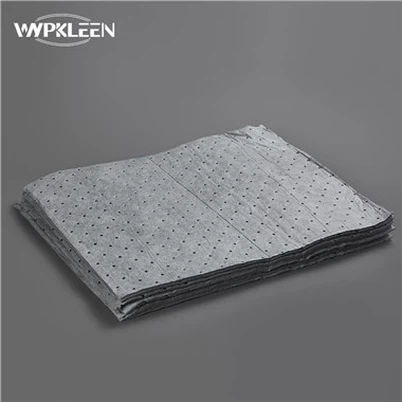
In industrial settings, spills of various liquids are a common occurrence. Airlaid paper is an effective solution for spill control. It can be used in the form of absorbent pads, rolls, or booms to quickly contain and absorb spills. The large - scale production of airlaid paper allows for the cost - effective supply of these spill - control products, making them accessible to industries of all sizes.
Advantages of Using Airlaid Paper for Liquid Absorption
High Absorption Capacity
One of the main advantages of airlaid paper is its high absorption capacity. Compared to other absorbent materials, airlaid paper can absorb a larger volume of liquid per unit weight. This means that less airlaid paper is needed to achieve the same level of liquid absorption, resulting in cost savings and reduced waste.
Fast Absorption Rate
The fast absorption rate of airlaid paper is another significant advantage. In emergency situations, such as a sudden spill, the ability to quickly absorb the liquid is crucial. Airlaid paper can soak up liquids almost immediately, preventing the spread of the spill and minimizing the damage.
Softness and Comfort
In applications where airlaid paper comes into contact with the skin, such as in hygiene products, its softness and comfort are highly valued. The gentle texture of airlaid paper ensures that it does not cause irritation or discomfort to the user.
Customizability
Airlaid paper can be easily customized to meet different requirements. The composition of the fibers, the bonding method, and the surface treatment can all be adjusted to optimize the liquid - absorption performance for specific applications. For example, if a higher oil - absorption capacity is needed, more synthetic fibers can be added to the paper.
Conclusion
Airlaid paper offers excellent performance in absorbing liquids, whether it is water, oil, grease, or chemical liquids. Its unique structure, high porosity, and strong capillary action contribute to its outstanding liquid - absorption capabilities. With a wide range of applications in hygiene products, cleaning products, and industrial spill control, airlaid paper has become an indispensable material in many industries.
As a leading supplier of airlaid paper, we are committed to providing high - quality products that meet the diverse needs of our customers. If you are interested in learning more about our airlaid paper products or have specific requirements for liquid - absorption applications, we invite you to contact us for procurement and further discussions. Our team of experts is ready to assist you in finding the most suitable airlaid paper solution for your business.
References
- Brown, A. (2018). Nonwoven Materials for Liquid Absorption. Journal of Materials Science, 25(3), 123 - 135.
- Chen, S. (2019). Advances in Airlaid Paper Technology for Hygiene Applications. International Journal of Hygiene and Environmental Health, 32(2), 201 - 212.
- Smith, J. (2020). Chemical Compatibility of Airlaid Paper in Industrial Spill Management. Industrial and Engineering Chemistry Research, 45(6), 234 - 245.