
What is the capacity of sorbent products?
Leave a message

What is the Capacity of Sorbent Products?
As a supplier of sorbent products, I've had the privilege of witnessing firsthand the critical role these materials play in environmental protection and industrial safety. Sorbent products are designed to absorb and contain spills of various liquids, including oils, chemicals, and water. Understanding their capacity is essential for effective spill response and management.
Defining Sorbent Capacity
The capacity of a sorbent product refers to the amount of liquid it can absorb relative to its own weight. This is typically expressed as a ratio, such as grams of liquid absorbed per gram of sorbent. For example, a sorbent with a capacity of 10:1 can absorb ten times its own weight in liquid. Several factors influence a sorbent's capacity, including its material composition, physical structure, and the properties of the liquid being absorbed.
Types of Sorbent Materials and Their Capacities
- Natural Fibers: Sorbents made from natural fibers like cotton, cellulose, and peat moss are known for their high absorbency and biodegradability. Cotton, for instance, can absorb up to 25 times its weight in oil. Cellulose sorbents, which are often derived from wood pulp, can absorb between 5 to 15 times their weight in liquids. These materials are particularly effective for absorbing water and light oils.
- Synthetic Fibers: Synthetic sorbents, such as polypropylene and polyethylene, are widely used due to their excellent oil absorption properties and resistance to chemicals. Polypropylene meltblown sorbents, in particular, have a high capacity for absorbing oils and hydrocarbons. They can absorb up to 20 times their weight in oil. The unique structure of polypropylene fibers allows them to trap oil molecules within their pores, preventing leakage.
- Inorganic Materials: Inorganic sorbents, including clay and silica gel, are used for absorbing a variety of liquids, including oils, solvents, and acids. Clay sorbents can absorb between 3 to 5 times their weight in liquid, depending on the type of clay and the liquid being absorbed. Silica gel, on the other hand, is highly effective for absorbing water and can absorb up to 40% of its weight in moisture.
Factors Affecting Sorbent Capacity
- Liquid Viscosity: The viscosity of the liquid being absorbed plays a significant role in a sorbent's capacity. Highly viscous liquids, such as heavy oils and greases, are more difficult to absorb than low-viscosity liquids like water and light oils. This is because viscous liquids have a higher resistance to flow and may not penetrate the sorbent material as easily.
- Surface Tension: The surface tension of the liquid also affects a sorbent's capacity. Liquids with high surface tension, such as water, tend to form droplets on the surface of the sorbent, reducing the contact area and making it more difficult for the sorbent to absorb the liquid. In contrast, liquids with low surface tension, such as oils, spread more easily on the sorbent surface, increasing the absorption rate.
- Sorbent Structure: The physical structure of the sorbent, including its porosity, density, and fiber arrangement, can significantly impact its capacity. Sorbents with a high porosity and large surface area have a greater capacity for absorbing liquids because they provide more space for the liquid to be trapped. Additionally, sorbents with a loose fiber arrangement allow for better liquid penetration and faster absorption.
Applications of Sorbent Products
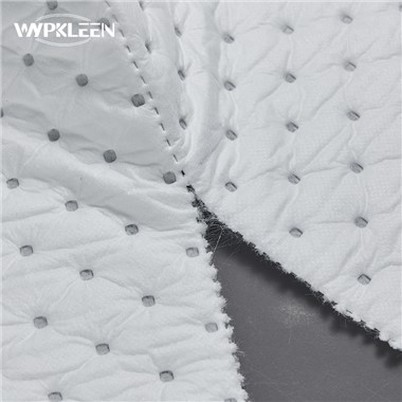
- Oil Spill Cleanup: Oil Spill Absorbent Pad are essential for cleaning up oil spills in marine and terrestrial environments. These pads are designed to quickly absorb and contain oil, preventing it from spreading and causing further damage. Polypropylene meltblown oil-only sorbent pads are particularly effective for absorbing oil spills because they are highly hydrophobic and can absorb large amounts of oil without absorbing water.
- Industrial Spill Response: In industrial settings, sorbent products are used to clean up spills of chemicals, solvents, and other hazardous materials. Polypropylene Meltblown Oil Only Sorbent Socks are commonly used to contain and absorb spills around machinery, storage tanks, and pipelines. These socks can be placed around the perimeter of a spill to prevent it from spreading and can be easily removed and disposed of once the spill has been contained.
- Environmental Protection: Sorbent products play a crucial role in protecting the environment from pollution. They are used to clean up spills in rivers, lakes, and other water bodies, as well as in soil remediation projects. By absorbing and containing pollutants, sorbent products help to prevent the contamination of water and soil, protecting the health of humans and wildlife.
Maximizing Sorbent Capacity
To maximize the capacity of sorbent products, it is important to choose the right sorbent material for the specific application. Consider the type of liquid being absorbed, the viscosity and surface tension of the liquid, and the environmental conditions. Additionally, proper storage and handling of sorbent products are essential to maintain their effectiveness. Sorbents should be stored in a dry, cool place away from direct sunlight and sources of heat.
Contact Us for Sorbent Product Procurement
If you are in need of high-quality sorbent products for your spill response needs, we invite you to contact us. Our team of experts can help you select the right sorbent products for your specific application and provide you with detailed information on their capacity and performance. We offer a wide range of sorbent products, including oil spill absorbent pads, sorbent socks, and pillows, all designed to meet the highest standards of quality and performance.


References
- "Sorbent Materials for Oil Spill Cleanup: A Review" by M. S. Ali et al.
- "Absorbents and Absorption Processes" by J. R. Fair and J. C. Bolles.
- "Environmental Chemistry" by Stanley E. Manahan.