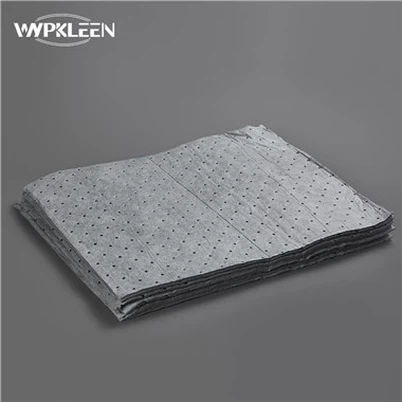

What is the elasticity of nonwoven paper fabric?
Leave a message

Yo, I'm a supplier of nonwoven paper fabric, and today I wanna chat about something super important in our industry - the elasticity of nonwoven paper fabric.
First off, let's break down what elasticity means in the context of nonwoven paper fabric. Elasticity, in simple terms, is how much a material can stretch and then go back to its original shape. For nonwoven paper fabric, this property can have a huge impact on its usability in different applications.
There are two main types of elasticity we usually talk about: tensile elasticity and recovery elasticity. Tensile elasticity is all about how much the fabric can stretch when you pull on it. You know, like when you're trying to use a piece of nonwoven fabric to wrap something a bit bigger than it seems to fit. The better the tensile elasticity, the more it can stretch without tearing.
Recovery elasticity, on the other hand, is about whether the fabric can bounce back to its original size and shape after it's been stretched. Think of it like a rubber band. When you stretch a rubber band and then let go, it snaps right back. For nonwoven paper fabric, good recovery elasticity means that it won't stay stretched out and lose its form after being used.
Now, why does elasticity matter so much for nonwoven paper fabric? Well, it's all about the end - use. Take Industrial Wipes For Cleaning for example. These wipes need to be able to stretch a bit when you're using them to clean around corners or get into tight spaces. If they don't have enough tensile elasticity, they'll just tear apart when you try to stretch them. And once you're done cleaning, you want them to go back to their normal shape so they can be stored properly or used again. That's where recovery elasticity comes in.
Another great example is Non Woven Dry Wipes Fabric. These wipes are often used in a variety of settings, from personal care to household cleaning. They need to be able to adapt to different surfaces and cleaning tasks. A fabric with good elasticity can conform to the shape of the object you're cleaning, whether it's a round bottle or a flat tabletop. This makes the cleaning process more effective.


The Polypropylene Woodpulp Spunlace Nonwoven is also an interesting case. This type of nonwoven fabric is a combination of polypropylene and woodpulp, and its elasticity can vary depending on the ratio of these materials. Polypropylene is known for its strength and some degree of stretchability, while woodpulp can add a bit of softness. The right balance between the two can result in a fabric with excellent elasticity for different applications.
There are a few factors that can affect the elasticity of nonwoven paper fabric. One of the main ones is the manufacturing process. Different methods of making nonwoven fabric, like spunbonding, melt - blowing, or spunlacing, can result in fabrics with different elastic properties. For instance, spunlacing often creates a fabric with better drapability and some degree of elasticity because it uses high - pressure water jets to entangle the fibers.
The type of fibers used in the fabric also plays a big role. Synthetic fibers like polyester and polypropylene tend to have different elastic characteristics compared to natural fibers like cotton or woodpulp. Synthetic fibers are often more stretchy and have better recovery properties, while natural fibers can add softness and absorbency.
The density of the fabric is another factor. A denser fabric might have less stretchability but more strength, while a lighter - weight fabric could be more elastic but less durable. It's all about finding the right balance for the specific application.
As a supplier, I know how crucial it is to offer nonwoven paper fabric with the right elasticity. That's why we spend a lot of time researching and testing different manufacturing processes and fiber combinations. We want to make sure that our customers get the best product for their needs.
If you're in the market for nonwoven paper fabric, whether it's for industrial wipes, dry wipes, or any other application, it's important to consider the elasticity. You don't want to end up with a fabric that tears easily or doesn't go back to its original shape. And that's where we come in. We can work with you to understand your specific requirements and provide the perfect nonwoven paper fabric with the ideal elasticity.
So, if you're interested in learning more about our nonwoven paper fabric products or want to start a procurement discussion, don't hesitate to reach out. We're here to help you find the best solution for your business.
References
- Textile Science textbooks
- Industry research reports on nonwoven materials