

What is the strength of Nonwoven Airlaid Paper?
Leave a message

Hey there! As a supplier of Nonwoven Airlaid Paper, I've had the privilege of seeing firsthand the incredible strength and versatility of this amazing product. In this blog post, I'm gonna share with you what makes Nonwoven Airlaid Paper stand out and why it's a game - changer in so many industries.
1. Physical Strength and Durability
One of the most impressive aspects of Nonwoven Airlaid Paper is its physical strength. When you pick it up, you can immediately feel that it's not your average paper. Unlike traditional paper products, Nonwoven Airlaid Paper Nonwoven Airlaid Paper is engineered to be tough. It can withstand a fair amount of pulling and stretching without tearing easily.
This durability comes from the unique manufacturing process. In the air - laying process, fibers are randomly dispersed and then bonded together. This random arrangement creates a network of fibers that distribute stress evenly across the paper. So, even when you're using it for tasks that require a bit of force, like heavy - duty cleaning, it holds up well.
For example, our Airlaid Paper Wipe Airlaid Paper Wipe is designed to handle all sorts of messes. Whether you're cleaning up grease in a kitchen or wiping down machinery in a factory, it won't fall apart on you. It can absorb a large amount of liquid and still maintain its structural integrity, which is a huge plus when you're dealing with spills and stains.
2. Absorbency
Another major strength of Nonwoven Airlaid Paper is its outstanding absorbency. The porous structure of the paper allows it to soak up liquids quickly and hold a significant amount. This is because the air - laying process creates a lot of tiny spaces between the fibers, which act like little pockets for liquid.
In the medical field, this absorbency is crucial. Nonwoven Airlaid Paper is often used in surgical drapes and wound dressings. It can absorb blood and other bodily fluids, keeping the wound area clean and dry. This helps prevent infections and promotes faster healing.
In the household, our Multipurpose Paper Wipe Roll Multipurpose Paper Wipe Roll is a great example of how absorbent this paper can be. You can use it to mop up spills on the floor, wipe down countertops, or even dry your hands. It soaks up water, juice, and other liquids in no time, making cleaning a breeze.
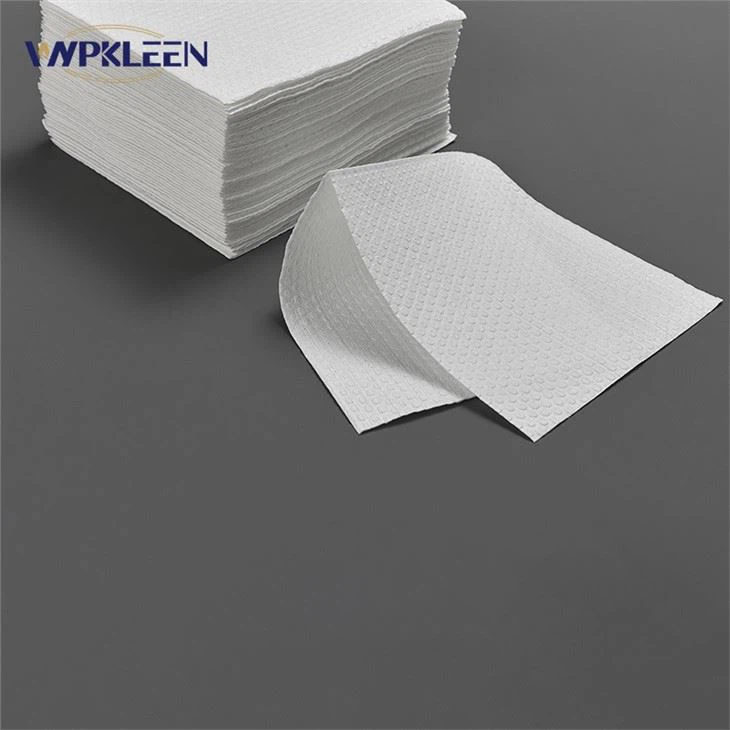

3. Softness and Comfort
Despite its strength and absorbency, Nonwoven Airlaid Paper is also incredibly soft. This makes it suitable for applications where comfort is important, such as personal care products.
For instance, in baby wipes, the softness of Nonwoven Airlaid Paper is essential. It won't irritate a baby's delicate skin. The gentle texture ensures that the wipes can be used safely and comfortably on the baby's body.
In the adult hygiene market, products like sanitary napkins and incontinence pads made from Nonwoven Airlaid Paper provide a soft and comfortable experience for users. The paper conforms to the body's shape and doesn't cause any discomfort, even during extended use.
4. Chemical Resistance
Nonwoven Airlaid Paper also has good chemical resistance. It can withstand exposure to a variety of chemicals without degrading or losing its properties. This makes it ideal for use in industrial and laboratory settings.
In chemical laboratories, it can be used to clean up chemical spills. The paper won't react with the chemicals, so it can safely absorb and contain them. This is important for maintaining a safe working environment and preventing chemical contamination.
In the automotive industry, Nonwoven Airlaid Paper can be used to clean engine parts. It can handle exposure to oils, fuels, and other automotive chemicals without falling apart or losing its cleaning ability.
5. Customizability
As a supplier, one of the things I love about Nonwoven Airlaid Paper is its customizability. We can adjust the properties of the paper according to our customers' needs.
We can change the density of the paper to make it more or less absorbent. If a customer needs a paper for light - duty cleaning, we can produce a less dense paper that's more cost - effective. On the other hand, if they need a paper for heavy - duty industrial use, we can increase the density to enhance its strength and absorbency.
We can also add different additives to the paper. For example, we can add antibacterial agents to make the paper suitable for use in medical and food - handling applications. Or we can add fragrances to make the paper more pleasant to use in household products.
6. Environmental Friendliness
In today's world, environmental friendliness is a big deal. Nonwoven Airlaid Paper has some great environmental benefits.
Most Nonwoven Airlaid Paper is made from natural fibers like wood pulp, which are renewable resources. This means that we're not depleting the earth's resources when we produce it.
Also, the paper is biodegradable. Once it's used and disposed of, it will break down naturally over time, reducing its impact on the environment. This is a huge advantage compared to some synthetic materials that can take hundreds of years to decompose.
7. Cost - Effectiveness
When it comes to cost, Nonwoven Airlaid Paper is a winner. It offers a great balance between performance and price.
Because of its strength and absorbency, you can use less of it to achieve the same results as other products. For example, our Multipurpose Paper Wipe Roll can clean more effectively with fewer wipes, which means you're saving money in the long run.
In industrial applications, the durability of Nonwoven Airlaid Paper means that it doesn't need to be replaced as often. This reduces the overall cost of using the product.
If you're in the market for Nonwoven Airlaid Paper or any of our related products like Airlaid Paper Wipes or Multipurpose Paper Wipe Rolls, I encourage you to reach out for a procurement discussion. We're always happy to talk about your specific needs and how our products can meet them. Whether you're a small business or a large corporation, we've got the solutions for you.
References
- "Nonwoven Materials: Structure, Properties, and Applications" by Fredric L. Buchholtz and Andrew T. Morgan
- "The Handbook of Nonwoven Filter Media" by A. K. Haghi and W. J. Knapton


