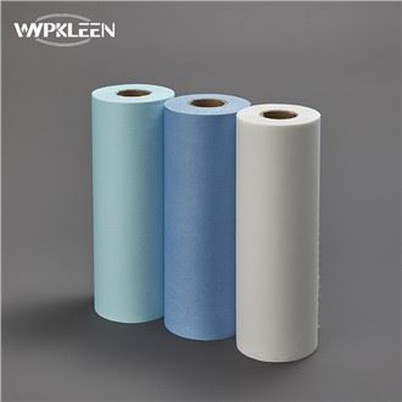


Melt-blown Non-woven Fabric
Leave a message
Melt-blown non-woven fabric is mainly used to filter dust, microorganisms, haze, and other micron particles, which can be called the "heart" of masks. The appearance is white, smooth, and soft, and the fiber fineness of the material is 0.5-1.0 micron.
The random distribution of the fiber provides more opportunities for thermal bonding between the fibers so that the melt-blown gas filter material has a larger specific surface area and a higher porosity (≥75%). After high voltage electret electrostatic treatment, it has the characteristics of low resistance, high efficiency, and high dust capacity.
Alias: melt-blown cloth, mask cloth, PP non-woven cloth
English: Melt blowing
Raw materials: Plastic, polypropylene (PP), melt blown special material
Melt-blown nonwoven fabric is a nonwoven fabric with static electricity. Melt blowing is a conventional manufacturing method for micron and nanofiber. The polypropylene polymer solution is squeezed out by a small high-speed nozzle, and the ultrafine polypropylene short fiber with a diameter of 0.5-1.0 micron is extruded.
The unique capillary structure of melt-blown nonwoven fabric increases the number and surface area of fibers per unit area, and the void is extremely fine. Through high voltage electret electrostatic treatment, the fiber has negative electrostatic adsorption ability, so it has a good air filter.