

What Are The Materials Of The Wet Wipes?
Leave a message
When it comes to wet wipes, we are all familiar with it. In our daily life, we can always see it. At present, wet wipes on the market can be roughly divided into two categories. One is that it has been disinfected but cannot disinfect other items. One is the disinfectant wipes that are not only disinfected, but also disinfect other items.
When using it, it is not difficult to find that the material of the wet wipes is a kind of cloth similar to cotton. In fact, according to the material, wet wipes can be divided into
1. Wet-strength paper
The so-called wet-strength paper refers to paper with a wet-strength agent added. Generally judge wet strength paper, there are the following standards:
Wet strength/dry strength (tensile strength)>20%;
When damp or immersed in water, it still maintains a dry strength of more than 15% and can resist cracking or dissociation of the paper.
Different products also have other properties, such as higher stiffness and printability, good smoothness, especially appearance properties (such as holes, stains and dust, etc.).
Papermaking with chemical wood pulp or cotton pulp, and adding wet strength agents such as melamine resin and polyepichlorohydrin to obtain wet strength during the papermaking process.
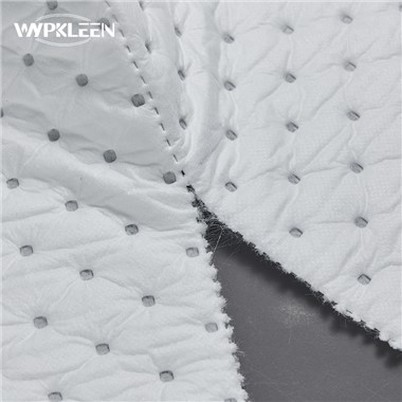
2. Non-woven fabric
The non-woven fabric has no warp and weft threads, it is very convenient to cut and sew, and it is light in weight and easy to shape, which is deeply loved by craft lovers.
Because it is a kind of fabric that does not need to be spun and weaves, it just oriented or randomly arrange the textile short fibers or filaments to form a web structure, which is then reinforced by mechanical, thermal bonding or chemical methods.
It is not made of interwoven and knitted yarns one by one, but the fibers are directly bonded together by physical methods. Therefore, when you get the sticky scale in your clothes, you will find that, It is impossible to draw a single thread. Non-woven fabric breaks through the traditional textile principle, and has the characteristics of short process flow, fast production rate, high output, low cost, wide use, and multiple sources of raw materials.
If you have material requirements, check the ingredient list and choose the appropriate material before purchasing.