Are sorbent products biodegradable?
Leave a message

Hey there! I'm a supplier of sorbent products, and today I want to dig into a question that often pops up: Are sorbent products biodegradable? It's a super important topic, especially in our eco - conscious world.
First off, let's understand what sorbent products are. These are materials designed to soak up liquids, mainly oil and other chemicals. They're used in all sorts of places, from industrial sites dealing with oil spills to small workshops where there might be a bit of fluid leakage. As a supplier, I've seen the wide range of applications for these products, and it's clear that they play a crucial role in keeping our environments clean and safe.
Now, onto the big question: biodegradability. Biodegradable materials are those that can be broken down by natural organisms like bacteria and fungi over time. This process returns the materials to the environment in a relatively harmless way. But when it comes to sorbent products, the answer isn't a simple yes or no.
There are different types of sorbent products, and their biodegradability varies. One of the most common types of sorbents is made from polypropylene. Polypropylene is a synthetic polymer, and unfortunately, it's not biodegradable in the traditional sense. It can take hundreds of years for polypropylene to break down in the environment.
Take our Polypropylene Meltblown Oil Only Sorbent Socks. These are great at soaking up oil and are very popular in industries where oil spills are a concern. They're lightweight, easy to use, and can hold a large amount of oil. But because they're made of polypropylene, they're not going to break down quickly in nature. Once they've done their job of absorbing oil, they usually end up in landfills, where they'll sit for a long, long time.
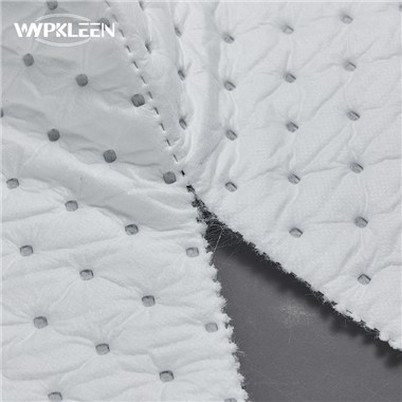
On the other hand, there are some sorbent products that are more environmentally friendly and biodegradable. These are often made from natural materials like cellulose, which is derived from plants. Cellulose - based sorbents can be broken down by microorganisms in the soil or water. They're a great option for those who are really concerned about the environmental impact of their sorbent use. For example, some cellulose - based Oil Spill Absorbent Pad can effectively soak up oil and then be disposed of in an eco - friendly way. They'll decompose over time, reducing the long - term waste problem.
But it's not all black and white. Even with cellulose - based sorbents, there are some considerations. The rate of biodegradation can be affected by many factors, such as temperature, humidity, and the presence of the right microorganisms. In some environments, the biodegradation process might be slower than expected. Also, the performance of cellulose - based sorbents might not be as good as polypropylene in some cases. Polypropylene sorbents are often more resistant to tearing and can absorb more oil per unit of weight.
As a supplier, I get a lot of questions from customers about which type of sorbent to choose. If environmental impact is the top priority, then biodegradable sorbents are the way to go. But if performance and cost - effectiveness are more important, polypropylene sorbents might be a better option. It really depends on the specific needs of the customer.
Another thing to think about is the disposal of used sorbent products. For non - biodegradable polypropylene sorbents, proper disposal is crucial. They should be collected and sent to a licensed waste management facility. Some facilities can recycle the used polypropylene sorbents, turning them into other plastic products. This helps to reduce the amount of waste going to landfills.
For biodegradable sorbents, while they can break down naturally, it's still important to make sure they're disposed of in the right way. If they've been used to absorb hazardous chemicals, they need to be treated as hazardous waste and disposed of accordingly. Just because they're biodegradable doesn't mean they can be casually thrown away if they're contaminated.
In the industry, there's a growing trend towards more sustainable sorbent products. Manufacturers are constantly researching and developing new materials that are both effective at absorbing liquids and environmentally friendly. We're seeing more hybrid sorbents that combine the best of both worlds - the performance of synthetic materials and the biodegradability of natural materials.


So, to sum it up, not all sorbent products are biodegradable. Polypropylene - based sorbents, which are very common, are generally not biodegradable. But there are biodegradable options available, mainly those made from natural materials like cellulose. When choosing a sorbent product, customers need to weigh the environmental impact against performance and cost.
If you're in the market for sorbent products and have questions about which type is right for you, don't hesitate to reach out. I'm here to help you make the best decision for your specific needs. Whether you're dealing with a small oil spill in a workshop or a large - scale industrial leak, we've got a range of sorbent products to suit your requirements. Let's have a chat and find the perfect solution for you.
References
- "Plastic Degradation and Biodegradation: A Review." By A. Shah et al.
- "Cellulose - Based Sorbents for Oil Spill Cleanup: A Review." By X. Wang et al.