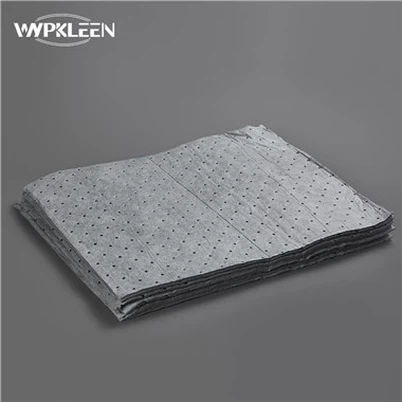

Are water absorbent pads effective in absorbing oil?
Leave a message

Hey there! I'm a supplier of water absorbent pads, and I often get asked, "Are water absorbent pads effective in absorbing oil?" Well, let's dive right into this topic and find out.
First off, it's important to understand what water absorbent pads are made of and how they work. There are different types of these pads, and two common ones are the Polypropylene Absorbent Pad and the Cotton Absorbent Pad.
Polypropylene absorbent pads are quite popular. Polypropylene is a synthetic material that has some unique properties. It's hydrophobic, which means it repels water. But when it comes to oil, it has a high affinity for it. The structure of polypropylene allows it to trap oil molecules within its fibers. When you place a polypropylene absorbent pad on an oil spill, the oil is quickly drawn into the pad. The pad's porous nature provides a large surface area for the oil to adhere to. This makes it very effective in cleaning up oil spills, whether it's a small leak in a garage or a larger spill in an industrial setting.
On the other hand, cotton absorbent pads have their own charm. Cotton is a natural material, and it's known for its absorbency. While it can absorb water, it also has the ability to absorb oil. The fibers in cotton are able to hold onto oil through capillary action. Capillary action is the process by which a liquid moves through narrow spaces in a material due to the combination of adhesive and cohesive forces. However, compared to polypropylene pads, cotton pads may not be as effective in repelling water. So, if there's a mixture of water and oil, the cotton pad might absorb some water along with the oil, which could reduce its overall efficiency in absorbing just the oil.
Now, let's talk about Absorbent Mats for Oil. These mats are designed specifically for oil absorption. They are usually larger in size and can cover a wider area. They work on the same principles as the absorbent pads. The key advantage of using absorbent mats is that they can handle larger spills more effectively. For example, in a manufacturing plant where there are often oil leaks from machinery, an absorbent mat can be placed under the equipment to catch any oil that drips. This not only helps in keeping the area clean but also prevents the oil from spreading and causing safety hazards.
But how do we measure the effectiveness of these water absorbent pads in absorbing oil? One way is to look at the absorption capacity. This is the amount of oil that a pad or mat can absorb relative to its own weight. Different pads and mats have different absorption capacities. For instance, a high - quality polypropylene absorbent pad might be able to absorb up to 10 times its own weight in oil. This is a significant amount and shows just how effective it can be in dealing with oil spills.
Another factor to consider is the speed of absorption. In an emergency situation, such as an oil spill on a busy road or in a chemical plant, time is of the essence. A pad that can quickly absorb the oil will prevent it from spreading and causing more damage. Polypropylene pads generally have a fast absorption rate due to their hydrophobic nature and porous structure. They can start soaking up the oil as soon as they come into contact with it.


However, there are also some limitations. If the oil is very thick or viscous, it might not be absorbed as easily. For example, heavy crude oil has a high viscosity, and it may take longer for a pad to absorb it. In such cases, additional measures might be needed, such as heating the oil to reduce its viscosity or using a different type of absorbent material.
In addition, environmental factors can also affect the effectiveness of water absorbent pads. Temperature can play a role. In cold weather, the viscosity of oil increases, which can slow down the absorption process. Also, if the pad is exposed to extreme heat, it might lose some of its structural integrity, which could reduce its absorption capacity.
So, are water absorbent pads effective in absorbing oil? The answer is yes, but it depends on various factors. If you choose the right type of pad or mat for the specific situation, they can be a very efficient and cost - effective solution for dealing with oil spills. Whether you're a small business owner looking to clean up oil spills in your workshop or an industrial facility manager responsible for maintaining a safe and clean environment, water absorbent pads can be a valuable tool in your arsenal.
If you're interested in learning more about our water absorbent pads, including the Polypropylene Absorbent Pad, Cotton Absorbent Pad, and Absorbent Mats for Oil, we'd love to have a chat with you. We can provide you with more detailed information about our products, including their features, benefits, and prices. Contact us to start a discussion about your specific needs and how our water absorbent pads can help you solve your oil - absorption problems.
References
- "Handbook of Absorbent Materials" - This book provides in - depth information about different types of absorbent materials and their properties.
- "Environmental Science: A Global Concern" - It has sections on oil spills and the use of absorbents in environmental cleanup.