
How to measure the electrical insulation properties of Nonwoven Airlaid Paper?
Leave a message

As a supplier of Nonwoven Airlaid Paper, I understand the importance of accurately measuring its electrical insulation properties. These properties are crucial for various applications, such as in the electronics industry, where the paper may be used as an insulating material. In this blog post, I will share some key methods and considerations for measuring the electrical insulation properties of Nonwoven Airlaid Paper.
Understanding Electrical Insulation
Before delving into the measurement methods, it's essential to understand what electrical insulation means. Electrical insulation refers to the ability of a material to resist the flow of electric current. Good electrical insulators have high resistance, which prevents the passage of electrons and reduces the risk of electrical short - circuits and other electrical hazards. Nonwoven Airlaid Paper can be engineered to have specific insulation properties depending on its intended use.
Key Properties to Measure
Dielectric Strength
Dielectric strength is one of the most important electrical insulation properties. It is defined as the maximum electric field that a material can withstand without breaking down and allowing current to flow. To measure the dielectric strength of Nonwoven Airlaid Paper, a test sample is placed between two electrodes. A gradually increasing voltage is applied until the paper breaks down, and an electric arc forms. The dielectric strength is then calculated by dividing the breakdown voltage by the thickness of the paper sample.
Volume Resistivity
Volume resistivity measures the resistance of a material to the flow of electric current through its bulk. It is expressed in ohm - meters (Ω·m). To measure the volume resistivity of Nonwoven Airlaid Paper, a known voltage is applied across the sample, and the resulting current is measured. Using Ohm's law (V = IR), the resistance can be calculated, and then the volume resistivity can be determined based on the dimensions of the sample.
Surface Resistivity
Surface resistivity measures the resistance of a material to the flow of electric current along its surface. It is expressed in ohms per square (Ω/sq). Similar to volume resistivity, a voltage is applied, and the current flowing along the surface of the paper is measured. Surface resistivity is important as it can affect the performance of the paper in applications where surface charge accumulation or dissipation is a concern.
Measurement Equipment
High - Voltage Test Set
A high - voltage test set is used to apply the necessary voltage to the paper sample for dielectric strength testing. These test sets can generate voltages ranging from a few kilovolts to hundreds of kilovolts, depending on the requirements of the test. They are equipped with safety features to protect the operator and ensure accurate measurements.
Insulation Resistance Tester
An insulation resistance tester, also known as a megohmmeter, is used to measure the volume and surface resistivity of the paper. It applies a known voltage to the sample and measures the resulting current to calculate the resistance. Modern insulation resistance testers are often digital and can provide accurate and reliable measurements.
Electrodes
Appropriate electrodes are required for both dielectric strength and resistivity measurements. For dielectric strength testing, flat electrodes with a smooth surface are used to ensure uniform electric field distribution across the sample. For resistivity measurements, electrodes are designed to make good contact with the paper surface without damaging it.
Measurement Procedure
Sample Preparation
The first step in measuring the electrical insulation properties of Nonwoven Airlaid Paper is to prepare the test samples. The samples should be cut to a specific size and shape, typically a square or circular shape with a known area and thickness. The edges of the samples should be smooth to avoid any sharp edges that could cause premature breakdown during testing.
Conditioning
Before testing, the samples should be conditioned to a specific temperature and humidity environment. This is because the electrical insulation properties of Nonwoven Airlaid Paper can be affected by environmental conditions. For most applications, the samples are conditioned at a temperature of 23°C and a relative humidity of 50% for at least 24 hours.
Dielectric Strength Testing
Once the samples are prepared and conditioned, they are placed between the electrodes of the high - voltage test set. The voltage is gradually increased at a constant rate until the paper breaks down. The breakdown voltage is recorded, and the dielectric strength is calculated. Multiple samples are usually tested to obtain an average value and ensure the reliability of the results.
Resistivity Testing
For volume and surface resistivity testing, the electrodes are placed in contact with the paper sample, and the insulation resistance tester is used to apply a voltage and measure the current. The resistivity values are then calculated based on the measured resistance and the dimensions of the sample. Similar to dielectric strength testing, multiple samples are tested to obtain accurate results.
Factors Affecting Electrical Insulation Properties
Fiber Composition
The type of fibers used in Nonwoven Airlaid Paper can significantly affect its electrical insulation properties. For example, natural fibers such as cellulose may have different insulation characteristics compared to synthetic fibers. Cellulose fibers are generally good insulators, but their performance can be affected by moisture absorption. Synthetic fibers, on the other hand, may offer better resistance to moisture and chemical exposure.


Density
The density of the paper also plays a role in its electrical insulation properties. Higher - density papers tend to have better insulation performance as they have fewer voids and a more compact structure, which reduces the likelihood of electric current flow.
Moisture Content
Moisture can have a significant impact on the electrical insulation properties of Nonwoven Airlaid Paper. Water is a good conductor of electricity, so an increase in moisture content can reduce the insulation resistance and dielectric strength of the paper. Therefore, it is important to control the moisture content during both production and testing.
Applications of Nonwoven Airlaid Paper with Good Electrical Insulation Properties
Electronics Industry
In the electronics industry, Nonwoven Airlaid Paper with good electrical insulation properties can be used as insulating materials in printed circuit boards (PCBs), transformers, and capacitors. It can help prevent electrical short - circuits and improve the overall reliability of electronic devices.
Electrical Equipment
Nonwoven Airlaid Paper can also be used in electrical equipment such as motors and generators. It can be used as an insulating layer to protect the electrical components from damage and ensure their proper functioning.
Conclusion
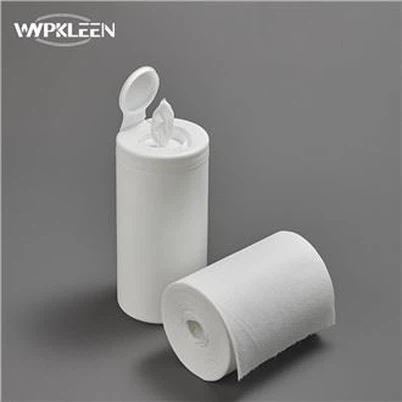
Measuring the electrical insulation properties of Nonwoven Airlaid Paper is a complex but essential process. By understanding the key properties, using the right measurement equipment, and following a proper measurement procedure, we can accurately determine the insulation performance of the paper. As a supplier of Nonwoven Airlaid Paper, we are committed to providing high - quality products with excellent electrical insulation properties. Our Multipurpose Paper Wipe Roll and Airlaid Tissue Paper are suitable for a wide range of applications where electrical insulation is required.
If you are interested in our Nonwoven Airlaid Paper products or have any questions about their electrical insulation properties, please feel free to contact us for procurement and further discussion.
References
- ASTM D149 - 18, Standard Test Method for Dielectric Breakdown Voltage and Dielectric Strength of Solid Electrical Insulating Materials at Commercial Power Frequencies.
- ASTM D257 - 14, Standard Test Methods for DC Resistance or Conductance of Insulating Materials.