
Can oil spill absorbent pads be used in oil - contaminated gravel cleanup?
Leave a message

Can oil spill absorbent pads be used in oil - contaminated gravel cleanup?
As a supplier of oil spill absorbent pads, I've often been asked whether these pads can be effectively used in the cleanup of oil - contaminated gravel. This is a crucial question, especially considering the environmental and economic impacts of oil spills on gravel - based areas such as driveways, parking lots, and some industrial sites. In this blog, I'll explore the feasibility, effectiveness, and limitations of using oil spill absorbent pads for this purpose.
Understanding Oil - Contaminated Gravel
Gravel is a porous and irregular material. When oil spills onto gravel, it can penetrate deep into the spaces between the gravel particles. The oil not only adheres to the surface of the gravel but also seeps down, making it challenging to remove. The size and shape of the gravel, as well as the type of oil involved, play significant roles in the cleanup process. For instance, heavier oils like crude oil may be more viscous and difficult to dislodge compared to lighter oils such as diesel.
How Oil Spill Absorbent Pads Work
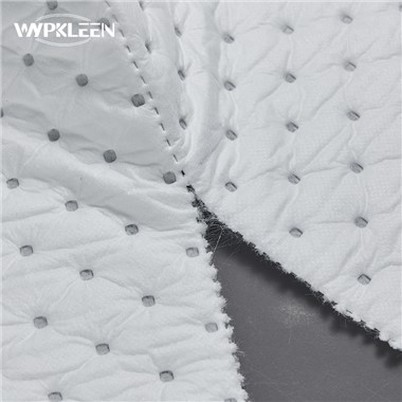
Oil spill absorbent pads are designed to attract and retain oil while repelling water. They are typically made from materials such as polypropylene, which has a high affinity for oil. When placed on an oil - contaminated surface, the pads soak up the oil through capillary action. The oil molecules are trapped within the fibers of the pad, preventing them from spreading further.
There are different types of oil spill absorbent pads available in the market. Oil Only Laminated Sorbent Pad is specifically engineered to absorb oil and not water, making it ideal for spills in wet environments. Industrial Oil Absorbent Sheet is another popular option, which is often used for larger spills in industrial settings.
Feasibility of Using Absorbent Pads on Oil - Contaminated Gravel
One of the main advantages of using oil spill absorbent pads on oil - contaminated gravel is their ease of use. They can be quickly deployed to the affected area without the need for complex equipment. The pads can be placed directly on the gravel surface, and they will start absorbing the oil immediately. This makes them a convenient solution for small - scale spills or as an initial response to larger spills.
However, there are also some challenges. The porous nature of gravel means that a significant amount of oil may be hidden beneath the surface. Absorbent pads can only absorb the oil that is in contact with them. Therefore, they may not be able to reach all the oil trapped within the gravel. In addition, the irregular shape of the gravel particles can make it difficult for the pads to conform to the surface, reducing their effectiveness.
Effectiveness of Absorbent Pads
The effectiveness of oil spill absorbent pads on oil - contaminated gravel depends on several factors. The thickness and quality of the pads are important. Thicker pads generally have a higher absorption capacity and can hold more oil. High - quality pads are also more likely to retain the absorbed oil without releasing it back onto the gravel.
The type of oil is another crucial factor. As mentioned earlier, heavier oils are more difficult to absorb than lighter oils. Pads may take longer to absorb heavy oils, and they may not be able to achieve the same level of cleanup as they would with lighter oils.
The extent of the oil contamination also plays a role. For lightly contaminated gravel, absorbent pads can be quite effective in removing a significant portion of the oil. However, for heavily contaminated gravel, additional cleanup methods may be required.
Limitations and Complementary Methods
While oil spill absorbent pads can be a useful tool in the cleanup of oil - contaminated gravel, they have their limitations. As discussed, they may not be able to reach all the oil trapped within the gravel. In such cases, complementary methods can be used.
One such method is mechanical agitation. Using a broom or a rake to stir up the gravel can help bring the hidden oil to the surface, making it more accessible to the absorbent pads. Another option is the use of detergents or cleaning agents. These can help break down the oil and make it easier to remove. However, it's important to choose environmentally friendly detergents to minimize the impact on the environment.

Case Studies
To illustrate the practical application of oil spill absorbent pads in oil - contaminated gravel cleanup, let's look at a few case studies.
In a small industrial yard, a diesel spill occurred on a gravel area. The spill was relatively small, and the management decided to use oil spill absorbent pads as the primary cleanup method. They placed the pads on the affected area and left them for a few hours. After removing the pads, they found that a significant amount of the diesel had been absorbed. They then used a broom to agitate the gravel and placed a new set of pads. This second round of cleanup further reduced the oil contamination.
In another case, a large - scale crude oil spill occurred on a gravel driveway. The absorbent pads were initially used to contain the spill and absorb as much oil as possible. However, due to the high viscosity of the crude oil and the deep penetration into the gravel, the pads alone were not sufficient. The cleanup team then used a combination of mechanical agitation, detergents, and absorbent pads to achieve a more thorough cleanup.
Conclusion
In conclusion, oil spill absorbent pads can be used in the cleanup of oil - contaminated gravel, but their effectiveness depends on various factors. They are a convenient and easy - to - use solution for small - scale spills or as an initial response to larger spills. However, they may not be able to completely remove all the oil trapped within the gravel, especially in cases of heavy contamination.
Complementary methods such as mechanical agitation and the use of detergents can enhance the effectiveness of the pads. By understanding the limitations and advantages of oil spill absorbent pads, we can make informed decisions about their use in oil - contaminated gravel cleanup.
If you are facing an oil spill on gravel or any other surface, and you are interested in learning more about our Medical Absorbent Pad, Oil Only Laminated Sorbent Pad, or Industrial Oil Absorbent Sheet, please feel free to contact us for more information and to discuss your specific requirements. We are here to help you find the best solution for your oil spill cleanup needs.
References
- ASTM International. (Year). Standard test methods for determining liquid retention of sorbent materials.
- National Oceanic and Atmospheric Administration. (Year). Oil Spill Response Manual.
- Environmental Protection Agency. (Year). Guidelines for Oil Spill Cleanup.