

Do water absorbent pads work in saltwater?
Leave a message

Do Water Absorbent Pads Work in Saltwater?
As a supplier of water absorbent pads, I've encountered numerous inquiries from clients regarding the efficacy of our products in saltwater environments. This blog post aims to delve into this topic, providing a comprehensive analysis based on scientific principles and real - world applications.
Understanding Water Absorbent Pads
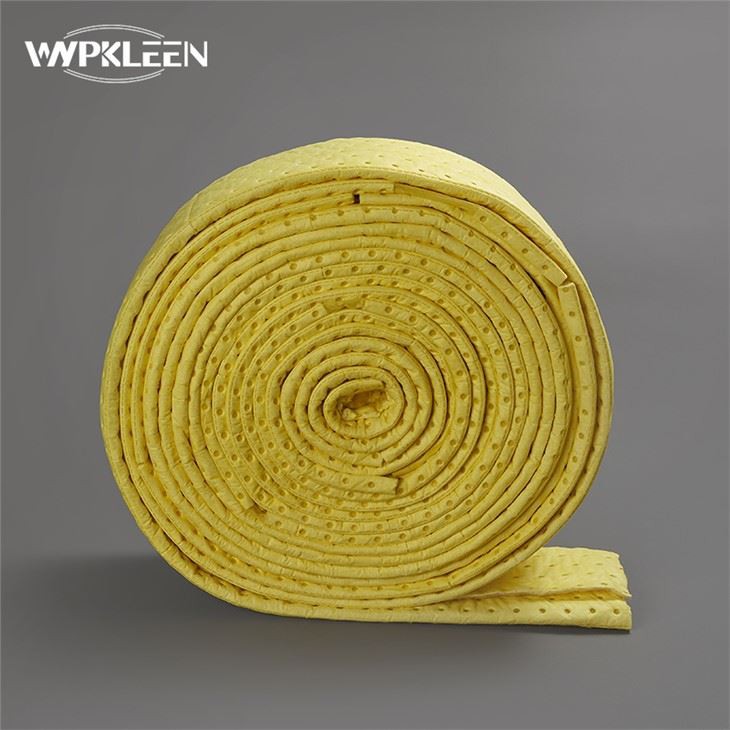
Water absorbent pads are designed to soak up water and other aqueous solutions. They are commonly used in various industries, from industrial spills to medical settings. Our range of water absorbent pads is engineered with high - quality materials that have a strong affinity for water molecules. The basic principle behind their operation is capillary action and chemical absorption. Capillary action allows the pad to draw water into its pores, while chemical absorption involves the interaction between the pad's material and water molecules at a molecular level.

The Composition of Saltwater
Saltwater is a complex mixture primarily composed of water and dissolved salts, mainly sodium chloride (NaCl). The presence of these salts alters the physical and chemical properties of water. For instance, saltwater has a higher density and a different surface tension compared to freshwater. These changes can potentially affect the performance of water absorbent pads.
How Salt Affects Absorption
The dissolved salts in saltwater can interfere with the absorption process. One of the main factors is the ionic strength of the solution. The ions in saltwater can interact with the water molecules and the absorbent material of the pad. In some cases, the ions may form a sort of "shell" around the water molecules, making it more difficult for the pad to absorb them.
Another aspect is the competition for binding sites on the absorbent material. The ions in saltwater may compete with water molecules for the available binding sites on the pad. This competition can reduce the overall absorption capacity of the pad. For example, if the absorbent material has a limited number of sites where it can bind to molecules, the presence of salt ions may occupy some of these sites, leaving fewer available for water absorption.
Testing the Absorbent Pads in Saltwater
To determine the effectiveness of our water absorbent pads in saltwater, we conducted a series of tests. We prepared saltwater solutions with different salt concentrations, ranging from low - salinity (similar to brackish water) to high - salinity (similar to seawater). We then placed our absorbent pads in these solutions and measured the amount of water absorbed over a specific period.
In the low - salinity solutions, our water absorbent pads showed relatively good performance. They were able to absorb a significant amount of water, although the absorption rate was slightly lower compared to freshwater. As the salt concentration increased, the absorption capacity decreased. However, even in high - salinity solutions, the pads still managed to absorb a considerable amount of water.
Real - World Applications
In real - world scenarios, water absorbent pads can still be useful in saltwater environments. For example, in marine industries, there may be spills of water - based fluids on decks or in machinery compartments. Our absorbent pads can help to quickly soak up these spills, preventing them from spreading and causing damage.
In coastal areas, where there may be flooding or water leaks that involve saltwater, our pads can be deployed to manage the water. They can be used in warehouses, factories, or even in residential properties near the coast.
Comparing with Other Absorbent Products
We also offer other absorbent products such as Industrial Oil Absorbent Sheet, Medical Absorbent Pad, and Absorbent Mats for Oil. While these products are designed for specific applications, our water absorbent pads are specifically tailored for water absorption, including saltwater to a certain extent. The industrial oil absorbent sheets are mainly focused on absorbing oil spills, and their performance in water absorption, especially saltwater, is not as effective as our water absorbent pads. Medical absorbent pads are designed for medical use and are optimized for absorbing body fluids, which are different from saltwater. Absorbent mats for oil are engineered to handle oil - based spills and are not the best choice for water absorption.
Conclusion
In conclusion, water absorbent pads do work in saltwater, although their performance may be affected by the salt concentration. Our tests have shown that they can still absorb a significant amount of water even in high - salinity solutions. They are a practical solution for various saltwater - related scenarios, such as marine spills and coastal water management.
If you are in need of water absorbent pads for your saltwater - related applications, we would be more than happy to discuss your requirements. Whether it's a small - scale spill or a large - scale water management project, our products can provide effective solutions. Feel free to reach out to us to start a discussion about your specific needs and how our water absorbent pads can meet them.
References
- "Principles of Colloid and Surface Chemistry" by Princen, H. M.
- "Handbook of Absorbent Materials" edited by Buchholz, F. L. and Graham, A. T.


