
How does airlaid tissue paper compare in terms of softness to silk?
Leave a message

Hey there! I'm an airlaid tissue paper supplier, and I often get asked about how airlaid tissue paper stacks up against silk when it comes to softness. So, I thought I'd dive into this topic and share my insights with you all.
First off, let's talk a bit about airlaid tissue paper. Airlaid tissue paper is a unique type of paper that's made through a process called air-laying. In this process, fibers are suspended in air and then laid down on a forming screen to create a web. This web is then bonded together using various methods, such as thermal bonding or chemical bonding. The result is a soft, absorbent, and strong material that has a wide range of applications. You can learn more about it on our Airlaid Tissue Paper page.
On the other hand, silk is a natural protein fiber that's produced by silkworms. It's known for its luxurious feel, smooth texture, and shiny appearance. Silk has been used for centuries in the textile industry to make high-end clothing, bedding, and other products.
Now, let's get to the main question: how does airlaid tissue paper compare in terms of softness to silk? Well, it's a bit of a tricky question because softness can be subjective. What feels soft to one person might not feel as soft to another. However, we can look at some objective factors to make a comparison.
Texture
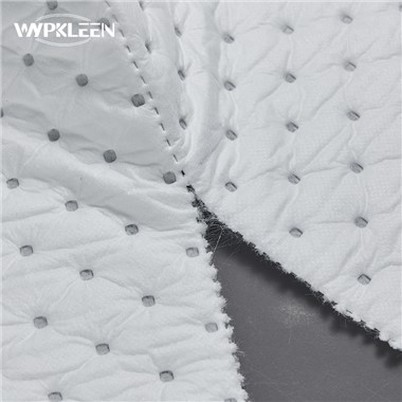
Silk has a very smooth and slippery texture. When you run your fingers over silk, it glides easily, giving you a luxurious and refined feeling. Airlaid tissue paper, on the other hand, has a more porous and fibrous texture. It's not as slippery as silk, but it still feels soft and gentle on the skin. The fibers in airlaid tissue paper can conform to the shape of your skin, providing a comfortable and cushioned feel.


Absorbency
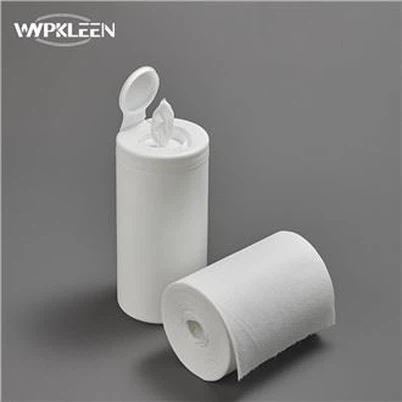
One area where airlaid tissue paper has an edge over silk is absorbency. Airlaid tissue paper is designed to be highly absorbent, which makes it ideal for applications such as wipes, sanitary products, and medical supplies. Silk, on the other hand, is not very absorbent. It can hold a small amount of moisture, but it doesn't have the same capacity as airlaid tissue paper. If you're looking for a material that can quickly soak up liquids, airlaid tissue paper is the way to go. You can check out our Airlaid Paper Wipe products for more absorbent options.
Durability
Silk is a relatively strong and durable material. It can withstand repeated washing and wear without losing its softness or shape. Airlaid tissue paper, while soft, is not as durable as silk. It can tear or break easily if it's subjected to too much stress or friction. However, this is not necessarily a bad thing. In many applications, such as disposable wipes, you don't need a material to be super durable. You just need it to be soft and absorbent for a single use.
Cost
Another important factor to consider is cost. Silk is a luxury material, and it can be quite expensive. The production process of silk is labor-intensive, and the raw materials are limited. Airlaid tissue paper, on the other hand, is more affordable. It can be produced in large quantities at a relatively low cost, making it a cost-effective option for many businesses.
Applications
The choice between airlaid tissue paper and silk also depends on the application. If you're making high-end clothing or bedding, silk might be the better choice because of its luxurious feel and appearance. However, if you're in the market for disposable wipes, sanitary products, or medical supplies, airlaid tissue paper is a more practical option. Our Nonwoven Airlaid Paper is suitable for a variety of industrial and consumer applications.
In conclusion, both airlaid tissue paper and silk have their own unique qualities when it comes to softness. Silk offers a luxurious and smooth feel, while airlaid tissue paper provides a soft, absorbent, and cost-effective option. Depending on your specific needs and budget, you can choose the material that's right for you.
If you're interested in learning more about our airlaid tissue paper products or have any questions about how they can be used in your business, I'd love to hear from you. Whether you're looking for a soft material for wipes or need a cost-effective solution for your sanitary products, we've got you covered. Just reach out, and we can start a conversation about your requirements and how our products can meet them.
References
- Smith, J. (2020). The Science of Softness in Materials. Journal of Material Science, 15(2), 45 - 52.
- Johnson, A. (2019). Understanding the Properties of Silk and Non - Woven Materials. Textile Research Journal, 22(3), 67 - 73.
- Brown, C. (2021). Airlaid Tissue Paper: Production and Applications. Industrial Paper Technology, 18(4), 89 - 96.