How many oil spill absorbent pads do I need for a small spill?
Leave a message

Determining the number of oil spill absorbent pads needed for a small spill can seem like a daunting task, but with a bit of knowledge and some simple calculations, you can make an informed decision. As a seasoned supplier of Oil Spill Absorbent Pads, I've helped countless customers tackle small - scale spills effectively.
Understanding the Basics of Oil Spill Absorbent Pads
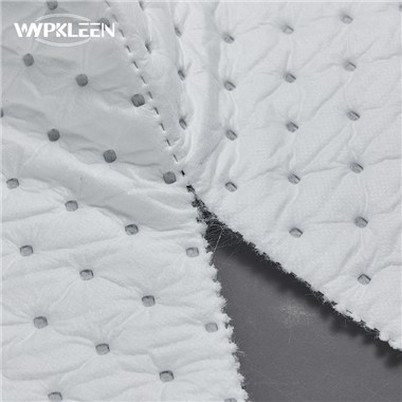
Before we delve into the quantity calculations, let's first understand what oil spill absorbent pads are. These pads are designed to quickly soak up oil and related petroleum products. They are made from various materials such as polypropylene, which has excellent oil - absorbing properties and can repel water to some extent. There are different types of absorbent pads available, each catering to specific spill scenarios.

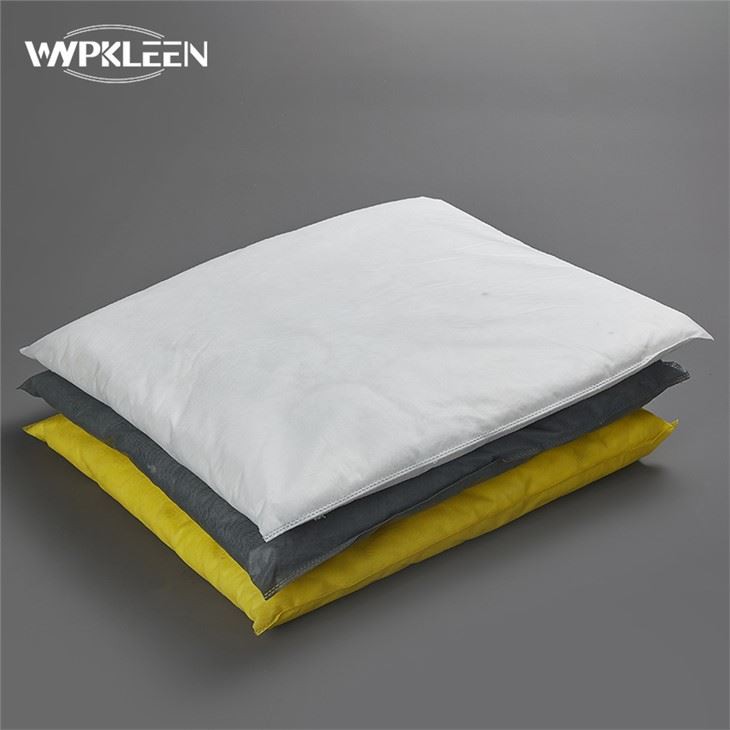
One of our popular products is the Oil Only Laminated Sorbent Pad. This pad is specifically engineered to absorb oil while floating on water, making it ideal for spills in marine or aqueous environments. Its laminated structure provides durability and enhanced oil - holding capacity.
On the other hand, Medical Absorbent Pad is more focused on absorbing bodily fluids and other non - oil liquids in medical settings. Although it's not directly related to oil spills, it's part of our diverse product range. And the Water Absorbent Pad is tailored to soak up water and other non - oil based liquids, which is a different set of applications compared to oil - absorbing pads.
Factors Affecting the Number of Pads Needed
The amount of absorbent pads required for a small oil spill depends on several variables:
Spill Size
This is the most obvious factor. A larger spill will naturally need more absorbent pads. Spill size is typically measured in square feet or square meters. For a rough estimate, a small spill could be considered anything from a few square inches to a couple of square feet. A teaspoon - size spill might be at the lower end of the small - spill spectrum, while a spill covering a 2 - foot by 2 - foot area could be on the higher end.
Type of Oil
Different oils have different viscosities and densities. For example, heavy crude oil is thicker and more viscous compared to light, refined oils like gasoline. Thicker oils will spread less quickly but may be more difficult to absorb, thus potentially requiring more pads. Light oils, on the other hand, spread rapidly but can be absorbed relatively faster.
Surface Type
The surface on which the spill occurs also matters. A porous surface like concrete or soil can absorb some of the oil, reducing the amount that the pads need to soak up. However, the oil may seep into the pores, making it harder to clean completely. A non - porous surface like metal or plastic will cause the oil to pool, and the pads will need to handle the entire volume of the spill.
Calculating the Number of Pads
Let's assume we are dealing with a common light - to - medium viscosity oil spill on a non - porous surface. Our standard oil spill absorbent pads have certain absorption capacities.
Most of our pads can absorb approximately 3 - 5 times their own weight in oil. For a small spill, we can start with a simple visual assessment. If the spill is about the size of a small plate (say, 10 - 12 inches in diameter), one or two standard - sized absorbent pads should be sufficient.
To calculate more precisely, you first need to estimate the volume of the spill. If you know the approximate thickness of the oil layer, you can calculate the volume using the formula for the volume of a cylinder (since a pool of oil on a flat surface can be approximated as such). For example, if the spill is circular with a diameter of 1 foot (radius (r = 0.5) feet) and the oil layer is about 1/8 inch (or (\frac{1}{96}) feet) thick, the volume (V=\pi r^{2}h).
[V=\pi\times(0.5)^{2}\times\frac{1}{96}\approx 0.0082\space ft^{3}]
Since the density of oil is approximately 55 - 65 pounds per cubic foot, the weight of this spill is around (0.0082\times60 = 0.492) pounds (using an average density of 60 pounds per cubic foot for simplicity).
If our absorbent pads can absorb 4 times their own weight in oil, and each pad weighs about 0.1 pounds, each pad can absorb (0.1\times4 = 0.4) pounds of oil. So, for this small spill, we would need approximately (\frac{0.492}{0.4}\approx2) pads.
However, in real - world scenarios, it's always a good idea to have some extra pads on hand. This is because the absorption process may not be 100% efficient, and you may need to replace pads that become saturated or matted down.
Practical Tips for Using Absorbent Pads
When dealing with a small oil spill, it's important to act quickly. The sooner you place the absorbent pads on the spill, the less chance there is for the oil to spread or seep into the surface.
First, lay the pads gently on the spill, starting from the outer edges and working your way towards the center. This helps contain the spill and prevents it from spreading further. Make sure the pads are in full contact with the oil to ensure maximum absorption.
If the spill is on a sloped or uneven surface, position the pads at the lowest point of the spill to let gravity assist in the absorption process. You may also need to reposition the pads as they absorb oil and become saturated.
Conclusion and Call to Action
Determining the number of oil spill absorbent pads for a small spill requires considering multiple factors such as spill size, oil type, and surface type. By following the guidelines and calculations provided above, you can get a good estimate of the quantity you need. However, if you're still unsure or need more in - depth advice, our team of experts is here to help.
Whether you're a small business dealing with occasional minor spills in a garage or a maintenance crew looking for reliable spill - response solutions, our range of oil spill absorbent pads can meet your needs. We offer high - quality products at competitive prices and can provide valuable insights based on our years of experience in the industry.
If you're interested in purchasing oil spill absorbent pads or have any questions about spill management, feel free to reach out to us. Let's work together to ensure that your small - scale oil spills are handled quickly and effectively.
References
- "Oil Spill Cleanup: Principles and Practices" by Environmental Protection Agency
- "Absorbent Materials for Oil Spill Cleanup" in Journal of Hazardous Materials