
How strong is airlaid tissue paper?
Leave a message

Hey there! As a supplier of Airlaid Tissue Paper, I've been getting a ton of questions lately about just how strong this stuff really is. So, I thought I'd sit down and write a little something to clear up any confusion and give you the lowdown on the strength of Airlaid Tissue Paper.
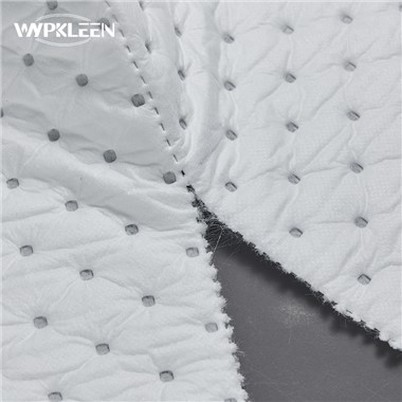
First off, let's talk about what Airlaid Tissue Paper is. Airlaid Tissue Paper is a type of nonwoven material that's made by using air to lay fibers onto a forming screen. This process creates a unique structure that gives the paper some pretty amazing properties. You can learn more about it on our website Airlaid Tissue Paper.
One of the key factors that contribute to the strength of Airlaid Tissue Paper is the type of fibers used. Most Airlaid Tissue Papers are made from a combination of wood pulp fibers and synthetic fibers. The wood pulp fibers provide a natural strength and absorbency, while the synthetic fibers add durability and tear resistance. This combination results in a paper that's strong enough to withstand a fair amount of wear and tear.
Another thing that makes Airlaid Tissue Paper strong is its structure. The air-laying process creates a random arrangement of fibers, which gives the paper a more uniform strength distribution. Unlike traditional paper, which can have weak spots due to the way the fibers are aligned during the papermaking process, Airlaid Tissue Paper has a more consistent strength throughout. This means that it's less likely to tear or break when you're using it.
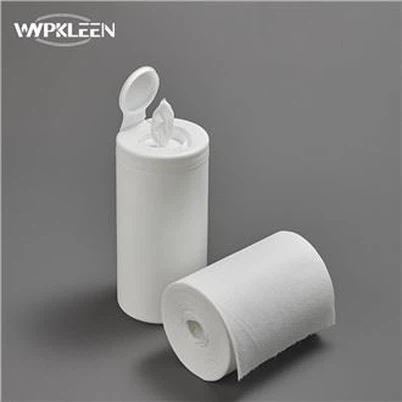
Let's take a look at some real-world applications to see just how strong Airlaid Tissue Paper can be. One of the most common uses for Airlaid Tissue Paper is in the production of wipes. Airlaid Paper Wipe are used in a variety of industries, from healthcare to household cleaning. In the healthcare industry, for example, wipes made from Airlaid Tissue Paper are used to clean and disinfect surfaces. These wipes need to be strong enough to withstand the rigors of cleaning, including scrubbing and wiping, without falling apart. And Airlaid Tissue Paper fits the bill perfectly. It can hold up to repeated use and still maintain its integrity.
In the household cleaning market, Airlaid Tissue Paper wipes are also a popular choice. Whether you're cleaning your kitchen countertops or your bathroom tiles, these wipes are tough enough to get the job done. They can absorb a large amount of liquid, which is great for cleaning up spills, and they won't tear easily when you're using them to scrub away dirt and grime.
But it's not just wipes where Airlaid Tissue Paper shows its strength. It's also used in other applications, such as packaging. Nonwoven Airlaid Paper is often used as a protective layer in packaging to cushion and protect products during shipping. The strength of the paper helps to prevent damage to the contents of the package, even when it's subjected to rough handling.
So, how do we measure the strength of Airlaid Tissue Paper? There are several tests that can be used to evaluate the strength of paper, including tensile strength, tear strength, and burst strength. Tensile strength measures the maximum amount of force that a paper can withstand before it breaks when it's being pulled. Tear strength, on the other hand, measures the force required to tear the paper. And burst strength measures the ability of the paper to withstand pressure from within.
Airlaid Tissue Paper typically has good tensile strength, which means that it can be pulled without breaking easily. Its tear strength is also quite impressive, especially when compared to traditional paper. And the burst strength of Airlaid Tissue Paper is sufficient for many applications, making it a reliable choice for products that need to withstand some pressure.
Of course, the strength of Airlaid Tissue Paper can vary depending on a few factors. The thickness of the paper, for example, can have an impact on its strength. Thicker papers generally tend to be stronger than thinner ones. The type and ratio of fibers used also play a role. Papers with a higher percentage of synthetic fibers may be more durable and have better tear resistance.
In addition to its strength, Airlaid Tissue Paper also has other great properties. It's highly absorbent, which makes it ideal for applications where liquid absorption is important. It's also soft and gentle, making it suitable for use on sensitive skin. And it can be easily customized with different additives and treatments to enhance its performance even further.


If you're in the market for a strong and reliable paper product, Airlaid Tissue Paper is definitely worth considering. Whether you're a manufacturer looking for a material to use in your products or a business owner in need of high-quality wipes or packaging materials, we've got you covered. We offer a wide range of Airlaid Tissue Paper products that are designed to meet your specific needs.
So, if you're interested in learning more about our Airlaid Tissue Paper products or if you'd like to discuss your requirements, don't hesitate to get in touch. We're here to help you find the perfect solution for your business. Just reach out to us, and we'll be happy to have a chat with you and see how we can work together.
References
- Various industry reports on nonwoven materials
- Technical data sheets on Airlaid Tissue Paper properties