

What is the flexibility of oil absorbent sheets?
Leave a message

As a supplier of oil absorbent sheets, I've witnessed firsthand the diverse and critical applications of these products across various industries. In this blog, I'll delve into the flexibility of oil absorbent sheets, exploring their many uses, advantages, and how they can be a game - changer in different scenarios.

Adaptability in Different Environments
One of the most remarkable aspects of oil absorbent sheets is their ability to perform in a wide range of environments. Whether it's an industrial setting, a marine environment, or a simple household spill, these sheets can effectively absorb oil.
In industrial facilities, where oil spills are a common occurrence, oil absorbent sheets are essential. They can quickly soak up spills on factory floors, machinery, and storage areas. For example, in automotive manufacturing plants, oil and lubricants are used extensively. A single drop of oil on the floor can pose a safety hazard, increasing the risk of slips and falls. Oil absorbent sheets can be placed strategically around workstations and machinery to catch any potential spills immediately.
In the marine industry, oil absorbent sheets are invaluable. Oil spills from boats, ships, or offshore platforms can have devastating effects on the environment. These sheets can be used to clean up small - scale spills on decks or in bilges. They are lightweight and easy to handle, making them ideal for use on vessels where space and weight are often limited. Moreover, they are designed to be water - resistant, so they can selectively absorb oil even in the presence of water.
Even in households, oil absorbent sheets can come in handy. For instance, if you're doing some DIY car maintenance in your garage and accidentally spill some motor oil, a sheet can quickly clean up the mess, preventing it from seeping into the concrete and causing long - term stains.
Compatibility with Different Types of Oil
Another aspect of their flexibility is their compatibility with various types of oils. Oil absorbent sheets can absorb different kinds of petroleum - based oils, such as crude oil, diesel, gasoline, and lubricating oils. They can also handle synthetic oils, which are commonly used in high - performance engines and industrial machinery.
The key lies in the materials used to make the absorbent sheets. Most oil absorbent sheets are made from polypropylene, a synthetic polymer that has a high affinity for oil. Polypropylene fibers have a large surface area, which allows them to trap oil molecules effectively. This makes the sheets suitable for a wide range of oil - related applications.
Different Forms and Sizes
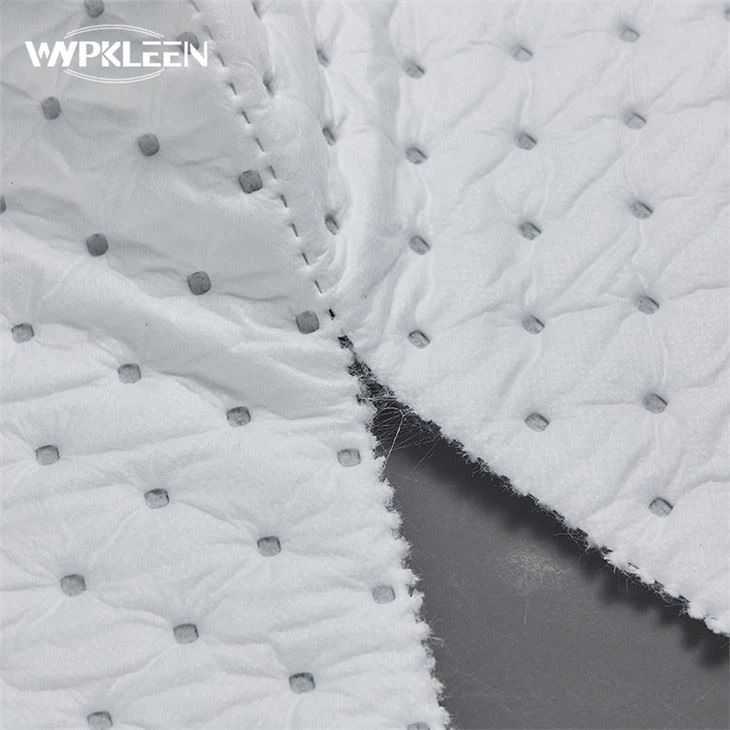
Oil absorbent sheets come in a variety of forms and sizes, providing further flexibility to meet different needs. There are flat sheets that can be laid out over a large area to absorb spills. These are great for covering large - scale leaks or for use in areas where spills are likely to spread, such as under storage tanks.
Rolls of oil absorbent sheets are also available. Rolls are convenient for continuous use, as you can cut off the required length as needed. They are often used in industrial settings where spills can occur at different points along a production line.
In addition to sheets and rolls, there are also Chemical Absorbent Pad, which are designed to absorb not only oil but also other chemicals. These pads are useful in chemical processing plants and laboratories, where spills of various substances can occur. Oil Only Laminated Sorbent Pad are specifically engineered to absorb only oil, leaving water behind. This is crucial in situations where you need to separate oil from water, such as in oil - water separators or in environmental cleanup efforts. Cotton Absorbent Pad are another option, which are more natural and biodegradable, suitable for applications where environmental friendliness is a priority.
Cost - Effectiveness and Reusability
Oil absorbent sheets offer cost - effective solutions for oil spill cleanup. They are relatively inexpensive compared to other cleanup methods, especially for small to medium - scale spills. This makes them a practical choice for businesses of all sizes, from small workshops to large industrial complexes.
Some oil absorbent sheets are also reusable. After they have absorbed oil, they can be wrung out or squeezed to remove the oil, and then reused multiple times. This not only reduces costs but also minimizes waste. However, it's important to note that the reusability depends on the type of oil absorbed and the condition of the sheet. For some heavy - duty or contaminated oils, the sheets may need to be disposed of properly after a single use.
Customization for Specific Needs
As a supplier, we understand that different customers have different requirements. That's why we offer customization options for oil absorbent sheets. We can tailor the size, shape, and absorbency of the sheets according to the specific needs of our customers.
For example, if a customer needs sheets for a particular piece of machinery with unique dimensions, we can cut the sheets to the exact size required. If a customer is dealing with a highly viscous oil, we can provide sheets with a higher absorbency rate to ensure efficient cleanup.
Conclusion
The flexibility of oil absorbent sheets is truly remarkable. Their ability to adapt to different environments, compatibility with various types of oil, availability in different forms and sizes, cost - effectiveness, reusability, and customization options make them an indispensable tool for oil spill cleanup.
If you're in need of high - quality oil absorbent sheets for your business or personal use, don't hesitate to reach out. We're here to help you find the perfect solution for your oil spill cleanup needs. Contact us to discuss your requirements and start a procurement conversation.
References
- "Absorbent Materials for Oil Spill Cleanup: A Review" by A. B. Pandey et al.
- "Polypropylene - Based Oil Absorbent Materials: Synthesis, Modification, and Application" by X. Wang et al.
- "Oil Spill Cleanup Techniques and Their Environmental Impact" by J. Smith.


