
What is the maximum amount of oil an oil absorbent sheet can hold?
Leave a message

Hey there! As a supplier of oil absorbent sheets, I often get asked, "What's the maximum amount of oil an oil absorbent sheet can hold?" Well, let's dive right into it and break this down.
First off, it's important to understand that the oil - holding capacity of an absorbent sheet isn't a one - size - fits - all number. There are several factors that come into play. The type of material the sheet is made from is a huge determinant. Most of our oil absorbent sheets are crafted from polypropylene. This material is great because it's hydrophobic, which means it repels water and has a high affinity for oil. Polypropylene has a unique molecular structure that allows it to trap oil molecules within its fibers.
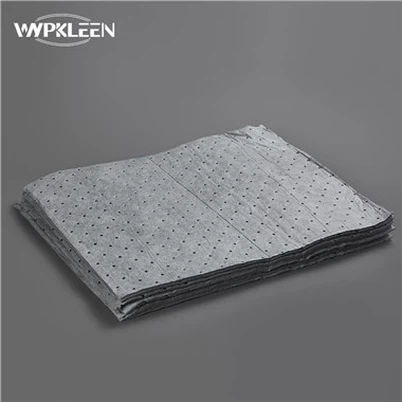
The thickness of the sheet also matters. Thicker sheets generally have more space to hold oil. Think of it like a sponge. A thicker sponge can soak up more water than a thin one. Our Absorbent Mats for Oil come in different thicknesses, and the thicker ones are designed for heavy - duty oil spills.
The porosity of the material is another key factor. A more porous sheet has more tiny holes or spaces where oil can be absorbed. These pores act like little pockets that trap the oil. When oil comes into contact with the sheet, it seeps into these pores and gets locked in.
Now, let's talk about some real - world numbers. On average, a standard oil absorbent sheet made of polypropylene can hold anywhere from 5 to 20 times its own weight in oil. For example, if you have a 1 - pound oil absorbent sheet, it could potentially hold between 5 and 20 pounds of oil. But this is just a ballpark figure.
If you're dealing with light oils like gasoline or kerosene, the absorbent sheet might reach the higher end of that range. These oils are less viscous, which means they flow more easily and can penetrate the sheet's pores more quickly. On the other hand, heavy oils like crude oil or motor oil are more viscous. They're thicker and don't flow as easily, so the sheet might hold closer to the lower end of the range.
Our Oil Only Laminated Sorbent Pad is specifically designed to handle different types of oils. The lamination process helps to increase its strength and oil - holding capacity. It can be really effective in situations where you need to clean up a large - scale oil spill.
Another aspect to consider is the surface area of the oil spill. If the oil is spread out over a large area, the absorbent sheet will have more surface to work with. This can increase the overall amount of oil it can absorb. But if the oil is in a concentrated puddle, the sheet might get saturated more quickly.
In some industrial settings, multiple absorbent sheets are used together to deal with large - scale spills. This way, they can cover more area and absorb more oil. You can layer the sheets on top of each other or place them side by side depending on the shape and size of the spill.
It's also worth mentioning that the condition of the oil absorbent sheet matters. If the sheet has been damaged or has been exposed to other contaminants before use, its oil - holding capacity can be reduced. So, it's important to store the sheets properly and handle them with care.
Now, let's compare oil absorbent sheets with other types of absorbents. Water Absorbent Pad are designed to absorb water, and they work on a different principle. They're made from materials that have a high affinity for water molecules. While they might be able to absorb some oil, they're not as efficient as oil - specific absorbent sheets.
In summary, the maximum amount of oil an oil absorbent sheet can hold depends on a variety of factors including the material, thickness, porosity, type of oil, surface area of the spill, and the condition of the sheet. But on average, you can expect a good quality polypropylene sheet to hold 5 to 20 times its own weight in oil.
If you're in the market for oil absorbent sheets, whether it's for a small workshop or a large industrial facility, we've got you covered. Our products are designed to be effective, reliable, and cost - efficient. We've spent years perfecting our manufacturing process to ensure that each sheet meets the highest standards.
If you have any questions about our products, the oil - holding capacity, or how to choose the right absorbent for your specific needs, don't hesitate to reach out. We're here to help you make the best decision for your oil spill cleanup requirements. Whether it's a minor leak or a major disaster, our oil absorbent sheets can be your go - to solution.


So, if you're interested in purchasing our oil absorbent sheets, just get in touch. We're ready to start a conversation and help you find the perfect product for your situation.
References:
- "Principles of Absorbent Materials" - A textbook on the science behind absorbent materials.
- Industry reports on oil spill cleanup and absorbent product performance.