
What sterilization methods are suitable for airlaid paper?
Leave a message

Hey there! I'm an airlaid paper supplier, and today I wanna chat about something super important in our industry: what sterilization methods are suitable for airlaid paper. Airlaid paper is used in a wide range of products, from Airlaid Tissue Paper to Airlaid Paper Wipe and Multipurpose Paper Wipe Roll. Making sure it's properly sterilized is crucial for both the quality and safety of these products.
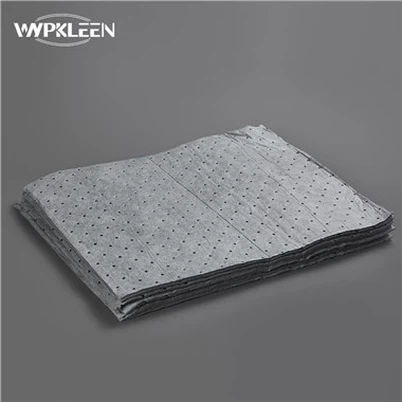
Let's start by understanding what airlaid paper is. It's a nonwoven material made by dispersing cellulose fibers in an air - stream and then bonding them together. This unique manufacturing process gives airlaid paper its softness, absorbency, and strength. But because it's often used in applications like hygiene products, food packaging, and medical supplies, sterilization is a must.
Heat Sterilization
One of the most common methods is heat sterilization. There are two main types: dry heat and moist heat.
Dry Heat Sterilization
Dry heat sterilization involves exposing the airlaid paper to high temperatures in an oven. It works by oxidizing the microorganisms' proteins, which ultimately kills them. The advantage of dry heat is that it doesn't introduce any moisture to the paper, which is great because airlaid paper can lose some of its properties if it gets too wet.
However, it has its drawbacks. It usually requires higher temperatures and longer exposure times compared to moist heat. For example, to effectively sterilize airlaid paper, you might need to heat it at around 160 - 180°C for 2 - 4 hours. This can be energy - intensive and time - consuming, which isn't always ideal for large - scale production.
Moist Heat Sterilization
Moist heat, on the other hand, uses steam to kill bacteria and other pathogens. Autoclaving is a well - known form of moist heat sterilization. In an autoclave, the airlaid paper is placed in a chamber where steam is generated under pressure. The high - pressure steam can penetrate the paper quickly and efficiently, killing microorganisms at a relatively lower temperature (around 121 - 134°C) in a shorter time (usually 15 - 30 minutes).
But there's a catch. The moisture from the steam can make the airlaid paper wet, and if it's not dried properly afterward, it can lead to mold growth or damage the paper's structure. So, careful drying processes need to be in place after autoclaving.


Chemical Sterilization
Chemical sterilization is another option. It uses various chemicals to kill or inactivate microorganisms.
Ethylene Oxide (EtO) Sterilization
Ethylene oxide is a gas that's widely used for sterilizing heat - sensitive materials like airlaid paper. It works by reacting with the proteins and nucleic acids of microorganisms, preventing them from functioning properly. The great thing about EtO sterilization is that it can be done at relatively low temperatures, so it won't damage the airlaid paper's structure.
However, EtO is a highly toxic and flammable gas. Special safety precautions need to be taken during the sterilization process, and the airlaid paper needs to be aerated for a long time after sterilization to remove any residual EtO. This can add to the overall cost and time of the production process.
Hydrogen Peroxide Sterilization
Hydrogen peroxide is a more environmentally friendly alternative. It can be used in either liquid or vapor form. When used as a vapor, it can penetrate the airlaid paper and break down the cell walls of microorganisms. It's less toxic than EtO and leaves behind only water and oxygen as by - products.
The drawback is that hydrogen peroxide vapor sterilization systems can be quite expensive to set up, and the process requires strict control of temperature, humidity, and concentration to be effective.
Radiation Sterilization
Radiation sterilization uses high - energy radiation to kill microorganisms. There are two main types: gamma radiation and electron beam radiation.
Gamma Radiation Sterilization
Gamma radiation is emitted by radioactive isotopes like cobalt - 60. It can penetrate deep into the airlaid paper, killing bacteria, viruses, and other pathogens. One of the big advantages of gamma radiation is that it can be done without opening the product packaging, which is great for maintaining the sterility of the final product.
But gamma radiation can cause some changes in the airlaid paper's properties. It can break down the cellulose fibers over time, leading to a decrease in strength and other performance characteristics. Also, handling radioactive materials requires strict safety regulations and specialized facilities.
Electron Beam Radiation Sterilization
Electron beam radiation uses high - energy electrons to sterilize the airlaid paper. It has a shorter penetration depth compared to gamma radiation, but it can sterilize the paper quickly. The process is also more energy - efficient and doesn't involve radioactive materials.
However, electron beam equipment can be expensive to purchase and maintain, and it may not be suitable for thick or dense airlaid paper products because of its limited penetration ability.
Ultraviolet (UV) Sterilization
UV sterilization is a relatively simple and cost - effective method. It uses UV light to damage the DNA of microorganisms, preventing them from reproducing. UV light can be easily installed in production lines, and it can be used to sterilize the surface of the airlaid paper as it moves along the conveyor belt.
But UV light has a very limited penetration depth. It can only sterilize the surface of the airlaid paper, so it's not suitable for products where complete sterilization throughout the paper is required. Also, the effectiveness of UV sterilization can be affected by factors like the distance between the UV lamp and the paper, the exposure time, and the presence of dust or other particles on the paper surface.
Choosing the Right Method
So, how do you choose the right sterilization method for your airlaid paper products? Well, it depends on several factors.
First, consider the end - use of the product. If it's for medical applications, a high - level sterilization method like gamma radiation or EtO sterilization might be necessary. For food packaging, a method that doesn't leave any harmful residues, like hydrogen peroxide sterilization, could be a better choice.
Second, think about the production scale. If you're producing airlaid paper in large quantities, a method that's fast and efficient, like electron beam radiation or autoclaving, might be more suitable. For smaller - scale production, a more flexible method like UV sterilization could work well,especially if you're looking for a cost - effective solution.
Finally, take into account the properties of the airlaid paper itself. If it's heat - sensitive, avoid high - temperature heat sterilization methods. If it's a thick or dense paper, a method with good penetration ability, like gamma radiation, might be needed.
As an airlaid paper supplier, I understand the importance of choosing the right sterilization method. It's not just about making a sterile product; it's about balancing quality, cost, and production efficiency. Whether you're in the market for Airlaid Tissue Paper, Airlaid Paper Wipe, or Multipurpose Paper Wipe Roll, I can help you find the best sterilization solution for your specific needs.
If you're interested in learning more about our airlaid paper products or discussing sterilization methods, don't hesitate to reach out. We're always happy to have a chat and see how we can work together to meet your requirements.
References
- Block, S. S. (2001). Disinfection, Sterilization, and Preservation. Lippincott Williams & Wilkins.
- Russell, A. D., Hugo, W. B., & Ayliffe, G. A. J. (1999). Principles and Practice of Disinfection, Preservation and Sterilization. Blackwell Science.
- McDonnell, G., & Russell, A. D. (1999). Antiseptics and disinfectants: activity, action, and resistance. Clinical Microbiology Reviews, 12(1), 147 - 179.