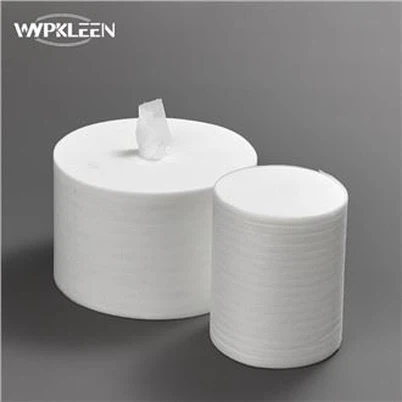


Spunlace Nonwoven Fabric For Wipes: 2026 Material & OEM Sourcing Guide
Leave a message
Published by Hangzhou Share-Win New Material Co., Ltd · Oct 24, 2026 · Category: Industry Guide
Spunlace (hydroentangled) nonwoven is the substrate behind most wet and cleansing wipes - and in 2026 it is also the material at the center of the plastic-free transition. With the global non-woven wipes market valued at USD 7.68 billion in 2026 and growing at a 9.9% CAGR through 2032, sourcing teams need a clear framework for specifying spunlace and selecting the right OEM partner. This guide covers fiber options, key specifications, market context and a practical supplier checklist.
What Is Spunlace Nonwoven Fabric
Spunlace fabric is produced by entangling fibers with high-pressure water jets, eliminating the need for chemical binders or needle punching. The process yields a soft, cloth-like, low-lint web with high wet strength - the properties that make it the preferred base for wipes. According to GEP Research, spunlace accounted for 58.2% of wipes substrate usage in Q1 2026, and viscose-and-polyester blends alone represented about 48.1% of spunlace wet-wipe revenue in 2025 (USD 4.25 billion).
Spunlace Fiber Options for Wipes
The performance and compliance profile of a wipe is determined by its fiber blend. The main options:
| Fiber / Blend | Key Characteristics | Best For | Biodegradability |
|---|---|---|---|
| Viscose (Rayon) | Soft, highly absorbent, hydrophilic | Personal care, household, cosmetic wipes | High (cellulose-based) |
| Woodpulp + PP (TST/SPP) | Strong, low cost, high absorbency | Industrial, workshop, general cleaning | Partial (synthetic PP side) |
| Woodpulp + Polyester | Durable, lint-controlled | Industrial, food service | Partial |
| 100% Polyester | Strong, hydrophobic options | Reinforced wipes, strength-critical tasks | Low |
| Lyocell / PLA | Biodegradable, soft, premium feel | Plastic-free, EU/US-compliant wipes | High |
The share of biodegradable fibers (Lyocell, PLA) in wipes rose from 12% in 2023 to 21.7% in Q1 2026, reflecting regulatory and buyer pressure toward plastic-free formats.
Key Specifications Buyers Should Specify
To brief a supplier accurately, define the following:
GSM (weight): typically 35–80 gsm. Light-duty household/cosmetic wipes use 35–50 gsm; industrial and reinforced wipes use 50–80 gsm or higher.
Fiber blend: viscose, woodpulp-PP, woodpulp-polyester, or biodegradable Lyocell/PLA.
Color & pattern: white, blue, aqua, green; plain or embossed (printed) for texture and cleaning performance.
Lint level: critical for cleanroom and electronics applications.
Absorbency & wet strength: matched to the task and lotion chemistry.
2026 Market & Sourcing Context
| Metric | Value | Context |
|---|---|---|
| Non-woven wipes market | USD 7.68 billion (2026) | Industry market reports |
| Projected CAGR | 9.9% through 2032 | Industry market reports |
| Spunlace share of wipes substrate | 58.2% (Q1 2026) | GEP Research |
| Biodegradable fiber share in wipes | 12% (2023) → 21.7% (Q1 2026) | GEP Research |
| Asia-Pacific spunlace wet-wipe demand | 41.2% of global (USD 3.64B, 2025) | Regional market analysis |
Regulation is reshaping sourcing: the EU Single-Use Plastics Directive requires microplastic labeling and restricts chlorine bleaching; the US WIPPES Act (passed Senate, March 2026) mandates "Do Not Flush" labeling; and China's revised wet-wipe national standard (Oct 2025) extends oversight to raw materials, additives and labeling.
How to Evaluate a Spunlace OEM Supplier
Use this six-point checklist when qualifying a manufacturer:
Substrate range: in-house spunlace, meltblown and spunbond capability improves consistency and cost control.
Fiber-blend flexibility: ability to supply viscose, woodpulp-PP, woodpulp-polyester and biodegradable blends at custom GSM.
Documented biodegradability: material-level test data, not marketing language.
OEM / private-label record: proven export experience to your target regions (EU, US, Southeast Asia).
Quality control: in-house testing for GSM, lint, absorbency and microbial limits.
Lead-time stability: resilient supply under resin-cost volatility.
Hangzhou Share-Win New Material Co., Ltd (SHARE-WIN) manufactures spunlace, meltblown and spunbond nonwoven parent rolls and finished goods, including spunlace nonwoven fabric, industrial wipes for cleaning and polyester woodpulp spunlace fabric, with more than 10 years of OEM export experience to America and Southeast Asia.
Application Matching
Industrial & workshop: woodpulp-PP spunlace for maintenance and surface prep.
Cleanroom & electronics: low-lint, anti-static substrates for precision equipment.
Household: viscose or biodegradable blends for cleansing and kitchen wipes.
Spill control: meltblown and sorbent products for oil and chemical containment.
Non-medical protective: spunlace-based wipes and cloths for light protective use.
Frequently Asked Questions
What is spunlace nonwoven fabric?
Spunlace (hydroentangled) nonwoven fabric is made by entangling fibers with high-pressure water jets instead of chemical binders or needles. The result is a soft, cloth-like, low-lint web with high wet strength, which is why it is the dominant substrate for wet and cleansing wipes.
Which fiber is best for wipes: viscose, polyester or woodpulp blends?
Viscose offers softness and high absorbency for personal care and household wipes. Woodpulp-PP and woodpulp-polyester blends deliver strength and cost-efficient absorbency for industrial and food-service wipes. Polyester adds durability. For plastic-free claims, Lyocell or PLA blends are preferred.
Is spunlace fabric biodegradable?
Spunlace made from cellulose fibers (viscose, woodpulp, Lyocell, PLA) is biodegradable and breaks down far faster than petroleum-based polypropylene or polyester. Blends containing PP or PET are only partially biodegradable on the synthetic side. Documented test data is required to support any degradability claim.
What GSM should I specify for wipes?
Common wipe substrates range from 35 to 80 gsm. Light-duty household and cosmetic wipes use 35–50 gsm; industrial and reinforcement wipes use 50–80 gsm or higher. The right GSM balances strength, absorbency, softness and cost for the target application.
How do I evaluate a spunlace OEM supplier in 2026?
Assess substrate range (spunlace, meltblown, spunbond), fiber-blend flexibility, documented biodegradability, OEM/private-label track record, quality control (in-house testing), lead-time stability and export compliance for your target region (EU, US, Southeast Asia).
Conclusion
In 2026, specifying spunlace for wipes means balancing softness, strength, absorbency and compliance. Buyers who define fiber blend, GSM and test-backed biodegradability - and partner with an integrated OEM supplier - are best positioned for both performance and regulation-ready sourcing. For material specifications, OEM options and samples, contact SHARE-WIN.