

Plastic-Free Nonwoven Wipes: Biodegradable Spunlace Fabric Reshapes 2026 Sourcing
Leave a message
The global non-woven wipes market reached USD 7.68 billion in 2026 and is projected to grow at a 9.9% CAGR through 2032. Behind that growth is a structural shift: buyers are moving away from plastic-based substrates toward biodegradable spunlace fabric. For OEMs and private-label brands, plastic-free is no longer a marketing preference - it is becoming a sourcing requirement shaped by regulation, retail policy and end-user scrutiny.
Why Plastic-Free Is Now a Sourcing Requirement
Three regulatory forces converged in 2025–2026 and changed how wipes are specified:
European Union - Single-Use Plastics Directive: mandates microplastic-content labeling on wipes and restricts chlorine use in bleaching, pushing brands toward natural-color pulp and chlorine-free processes.
United States - WIPPES Act (passed Senate, March 2026): establishes "Do Not Flush" labeling for baby and disinfecting wipes, increasing pressure on substrate dispersibility and claims validation.
China - revised national standard for wet wipes (implemented Oct 2025): extends oversight to raw-material selection, additive use, microbial limits and labeling across segmented categories.
The net effect: simply labeling a product "biodegradable" is no longer sufficient. The underlying nonwoven substrate must be engineered and tested to support the claim.
Spunlace Fabric: The Substrate Behind the Shift
Spunlace (hydroentangled) nonwoven is the backbone of most wet and cleansing wipes because it delivers cloth-like softness with high wet strength and low lint. According to GEP Research, spunlace accounted for 58.2% of wipes substrate usage in Q1 2026. Critically, spunlace can be built from cellulose-based fibers - viscose, woodpulp, Lyocell and PLA - rather than petroleum-based polypropylene or polyester.
This is why spunlace is central to the plastic-free transition. The share of biodegradable fibers (Lyocell, PLA) in wipes rose from 12% in 2023 to 21.7% in Q1 2026, and viscose-and-polyester blends alone represented about 48.1% of spunlace wet-wipe revenue in 2025 (USD 4.25 billion). For suppliers with in-house spunlace production, the ability to tune the fiber blend directly determines a buyer's compliance and premium positioning.
2026 Market Data Buyers Should Know
| Metric | 2025 / 2026 Value | Source Context |
|---|---|---|
| Global non-woven wipes market | USD 7.68 billion (2026) | Industry market reports |
| Projected CAGR | 9.9% through 2032 | Industry market reports |
| Wet tissues & wipes market | USD 27.6 billion (2026) | Industry market reports |
| Spunlace share of wipes substrate | 58.2% (Q1 2026) | GEP Research |
| Biodegradable fiber share in wipes | 12% (2023) → 21.7% (Q1 2026) | GEP Research |
| Asia-Pacific spunlace wet-wipe demand | 41.2% of global (USD 3.64B, 2025) | Regional market analysis |
What OEM Buyers Should Evaluate in a Spunlace Supplier
As substrate choice becomes a compliance decision, sourcing teams should assess suppliers on six points:
Substrate range: spunlace, meltblown and spunbond capability under one roof improves quality consistency and cost stability.
Fiber-blend flexibility: ability to supply viscose, woodpulp-PP and woodpulp-polyester spunlace at customized GSM.
Documented biodegradability: material-level test data, not marketing language.
OEM / private-label experience: proven export record to target regions (EU, US, Southeast Asia).
Lead-time stability: resilient supply under resin-cost volatility.
Application coverage: industrial, household, cleanroom, spill-control and non-medical protective formats.
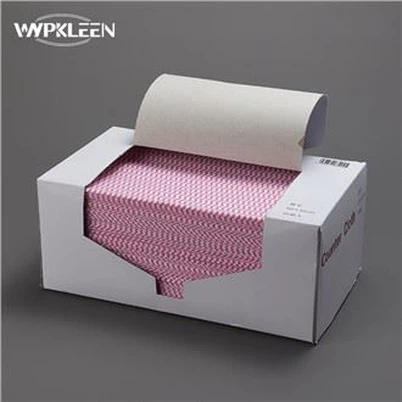
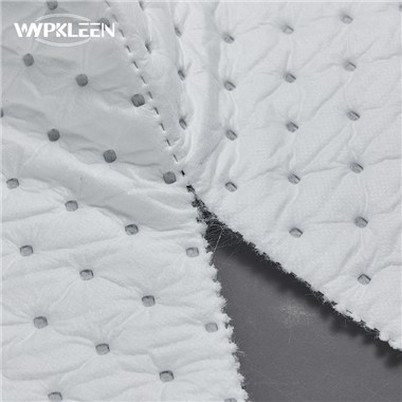
Hangzhou Share-Win New Material Co., Ltd (SHARE-WIN) manufactures spunlace, meltblown and spunbond nonwoven parent rolls and finished goods - including spunlace nonwoven fabric, industrial wipes for cleaning and sorbent pads - with more than 10 years of export experience to America and Southeast Asia.
Application Outlook: Industrial, Household, Cleanroom & Spill Control
The plastic-free transition is not limited to consumer wipes. Demand is broadening across:
Industrial & workshop cleaning: woodpulp-PP spunlace wipes for maintenance and surface prep.
Cleanroom & electronics: low-lint, anti-static substrates for precision equipment.
Household: biodegradable cleansing and kitchen wipes.
Spill control: meltblown and sorbent products for oil and chemical containment.
Each application rewards suppliers who can pair substrate engineering with application-specific converting.
Frequently Asked Questions
What is biodegradable spunlace nonwoven fabric?
Biodegradable spunlace nonwoven fabric is a hydroentangled web made from cellulose-based fibers such as viscose, woodpulp, Lyocell or PLA, rather than petroleum-based polypropylene or polyester. It delivers cloth-like softness and wet strength while breaking down far faster in the environment, making it a preferred substrate for plastic-free wipes.
Are spunlace wipes flushable?
Standard spunlace wipes are not automatically flushable. Only substrates engineered with dispersible woodpulp and short-fiber cellulose, validated to disperse in water, qualify as flushable. The US WIPPES Act (2026) mandates "Do Not Flush" labeling for baby and disinfecting wipes that do not meet dispersibility standards.
Which regions regulate plastic content in wipes in 2026?
The European Union's Single-Use Plastics Directive requires microplastic-content labeling and restricts chlorine bleaching; the United States passed the WIPPES Act in March 2026 for "Do Not Flush" labeling; and China implemented a revised national standard for wet wipes in October 2025 covering raw materials, additives and labeling.
How to choose a nonwoven wipes manufacturer in 2026?
Evaluate substrate capability (spunlace, meltblown, spunbond), fiber blend flexibility (viscose, woodpulp, PP), documented biodegradability, OEM/private-label experience, lead-time stability and export compliance for your target region (EU, US, Southeast Asia).
Conclusion
In 2026, plastic-free is the default direction for nonwoven wipes sourcing. Biodegradable spunlace fabric combines the softness, strength and compliance profile buyers need, and suppliers with integrated substrate and converting capability are best positioned to support OEMs through the transition. For material specifications, OEM options and sample requests, contact SHARE-WIN.