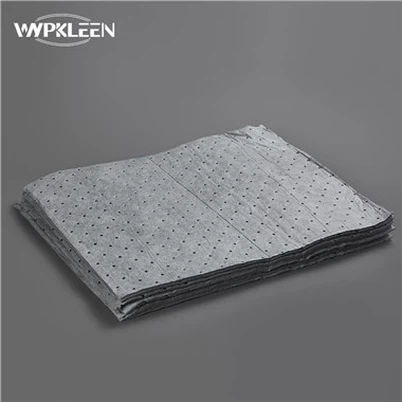

How does humidity affect Nonwoven Airlaid Paper?
Leave a message

Humidity is a crucial environmental factor that can significantly impact various materials, and nonwoven airlaid paper is no exception. As a supplier of Nonwoven Airlaid Paper, I have witnessed firsthand how humidity can influence the properties, performance, and quality of this versatile product. In this blog post, I will delve into the ways in which humidity affects nonwoven airlaid paper and discuss the implications for its production, storage, and end-use applications.
Understanding Nonwoven Airlaid Paper
Before we explore the effects of humidity, let's briefly review what nonwoven airlaid paper is. Nonwoven airlaid paper is a type of nonwoven fabric that is produced by depositing fibers onto a moving screen using air currents. The fibers are typically made from wood pulp, synthetic polymers, or a combination of both. Unlike traditional papermaking processes that rely on water to disperse the fibers, airlaid technology uses air, which allows for greater flexibility in fiber selection and web formation.


Nonwoven airlaid paper offers several advantages over conventional paper and other nonwoven materials. It has a high absorbency rate, excellent softness, and good strength properties. These characteristics make it suitable for a wide range of applications, including Airlaid Paper Wipe, Airlaid Tissue Paper, and various industrial and hygiene products.
Effects of Humidity on Nonwoven Airlaid Paper
Moisture Absorption
One of the most immediate effects of humidity on nonwoven airlaid paper is moisture absorption. The paper fibers have a natural affinity for water molecules, and in a high-humidity environment, they will absorb moisture from the surrounding air. This absorption can lead to several changes in the paper's properties.
Firstly, the weight of the paper increases as it takes on moisture. This can be a significant concern for applications where precise weight control is required, such as in the production of medical wipes or packaging materials. An increase in weight can also affect the handling and processing of the paper, making it more difficult to cut, fold, or print.
Secondly, moisture absorption can cause the paper to swell. The fibers expand as they absorb water, which can lead to a change in the paper's dimensions. This swelling can be particularly problematic in applications where tight tolerances are necessary, such as in the production of filters or precision components.
Strength and Tensile Properties
Humidity can also have a profound impact on the strength and tensile properties of nonwoven airlaid paper. When the paper absorbs moisture, the hydrogen bonds between the fibers are weakened. These hydrogen bonds are responsible for holding the fibers together and giving the paper its strength. As the bonds are disrupted, the paper becomes more flexible and less resistant to tearing and stretching.
In a high-humidity environment, the paper may experience a significant reduction in its tensile strength. This can make it more prone to breakage during handling, processing, or use. For example, in the production of disposable diapers or feminine hygiene products, a decrease in tensile strength can lead to product failures and customer dissatisfaction.
Conversely, in a low-humidity environment, the paper can become brittle. The lack of moisture causes the fibers to become dry and rigid, which can also reduce the paper's strength and flexibility. Brittle paper is more likely to crack or tear, especially when subjected to bending or folding.
Softness and Comfort
The softness and comfort of nonwoven airlaid paper are important factors in many of its end-use applications, particularly in the hygiene and personal care industries. Humidity can affect these properties by altering the surface characteristics of the paper.
In a high-humidity environment, the paper may feel damp and clammy to the touch. This can be unpleasant for the user and may reduce the perceived quality of the product. Additionally, the increased moisture can cause the fibers to stick together, which can make the paper feel less soft and smooth.
On the other hand, in a low-humidity environment, the paper can become dry and rough. The lack of moisture can cause the fibers to become more rigid and less flexible, which can result in a scratchy or uncomfortable feel. This can be a significant issue in applications where the paper comes into direct contact with the skin, such as in baby wipes or facial tissues.
Mold and Mildew Growth
Another potential problem associated with high humidity is the growth of mold and mildew on nonwoven airlaid paper. Mold and mildew are fungi that thrive in warm, moist environments. When the paper absorbs moisture and is exposed to these conditions for an extended period, it can provide an ideal breeding ground for these microorganisms.
Mold and mildew growth not only affects the appearance of the paper but can also pose a health risk. The spores produced by these fungi can cause allergic reactions and respiratory problems in some individuals. In addition, the presence of mold and mildew can compromise the integrity of the paper, reducing its strength and durability.
Implications for Production, Storage, and End-Use
Production
During the production of nonwoven airlaid paper, humidity control is essential to ensure consistent product quality. The manufacturing process typically involves several steps, including fiber blending, web formation, and bonding. Humidity can affect each of these steps in different ways.
For example, in the fiber blending process, humidity can influence the dispersion of the fibers. If the humidity is too high, the fibers may clump together, which can lead to uneven web formation. On the other hand, if the humidity is too low, the fibers may become statically charged, causing them to stick to the equipment and creating processing difficulties.
In the web formation and bonding steps, humidity can affect the bonding strength between the fibers. The bonding agents used in nonwoven airlaid paper rely on chemical reactions or physical interactions to hold the fibers together. These reactions can be influenced by the moisture content of the paper and the surrounding environment. Therefore, maintaining a stable humidity level during production is crucial to ensure proper bonding and consistent product quality.
Storage
Proper storage conditions are also critical to prevent humidity-related issues with nonwoven airlaid paper. The paper should be stored in a cool, dry place with a controlled humidity level. Ideally, the humidity should be maintained between 40% and 60% to minimize moisture absorption and prevent mold and mildew growth.
When storing the paper, it is important to protect it from direct contact with the floor or walls, as these surfaces can be a source of moisture. The paper should be stored on pallets or shelves and covered with a moisture-resistant material, such as plastic sheeting. Additionally, the storage area should be well-ventilated to prevent the buildup of moisture.
End-Use
In the end-use applications of nonwoven airlaid paper, humidity can also have a significant impact on the product's performance and user experience. For example, in the healthcare industry, where nonwoven airlaid paper is used in medical gowns, drapes, and wound dressings, humidity can affect the barrier properties of the paper. A high-humidity environment can cause the paper to become more permeable, which can increase the risk of contamination.
In the food packaging industry, humidity can affect the shelf life of the packaged products. If the paper absorbs moisture, it can provide a breeding ground for bacteria and other microorganisms, which can lead to spoilage and food safety issues. Therefore, it is important to consider the humidity conditions in the end-use environment when selecting nonwoven airlaid paper for these applications.
Mitigating the Effects of Humidity
To mitigate the effects of humidity on nonwoven airlaid paper, several strategies can be employed.
Humidity Control
The most effective way to control the effects of humidity is to maintain a stable humidity level in the production, storage, and end-use environments. This can be achieved through the use of humidifiers and dehumidifiers. Humidifiers can be used to increase the humidity in a low-humidity environment, while dehumidifiers can be used to reduce the humidity in a high-humidity environment.
In addition to using mechanical devices, it is also important to monitor the humidity levels regularly. This can be done using hygrometers, which are instruments that measure the relative humidity in the air. By monitoring the humidity levels, adjustments can be made to the humidifiers or dehumidifiers as needed to maintain the desired humidity range.
Coating and Treatments
Another strategy for mitigating the effects of humidity is to apply coatings or treatments to the nonwoven airlaid paper. These coatings can provide a barrier against moisture absorption and help to maintain the paper's strength and other properties.
For example, a hydrophobic coating can be applied to the paper to make it water-repellent. This coating can prevent the paper from absorbing moisture and reduce the risk of swelling, mold growth, and other humidity-related issues. Other treatments, such as cross-linking agents or resin coatings, can be used to improve the paper's strength and durability in high-humidity environments.
Packaging and Protection
Proper packaging and protection can also help to minimize the effects of humidity on nonwoven airlaid paper. The paper should be packaged in a moisture-resistant material, such as plastic bags or sealed containers, to prevent moisture from reaching the paper. Additionally, desiccants can be included in the packaging to absorb any moisture that may be present.
Conclusion
In conclusion, humidity is a critical factor that can have a significant impact on the properties, performance, and quality of nonwoven airlaid paper. From moisture absorption and changes in strength and dimensions to mold growth and reduced softness, humidity can pose numerous challenges in the production, storage, and end-use of this versatile material.
As a supplier of Nonwoven Airlaid Paper, we understand the importance of humidity control and the need to provide our customers with high-quality products that are resistant to humidity-related issues. By implementing proper humidity control measures, applying appropriate coatings and treatments, and using effective packaging and protection, we can help our customers overcome these challenges and ensure the success of their applications.
If you are interested in learning more about our nonwoven airlaid paper products or have any questions about how humidity may affect your specific application, please feel free to contact us. We would be happy to discuss your needs and provide you with the information and support you need to make an informed decision.
References
- ASTM International. (2023). Standard Test Methods for Water Vapor Transmission of Materials. ASTM E96/E96M - 23.
- CEN. (2022). Nonwovens - Test methods for nonwoven products - Part 1: Determination of mass per unit area. EN ISO 9073 - 1:2022.
- ISO. (2021). Hygiene products - Disposable nonwoven products - General requirements. ISO 22602:2021.