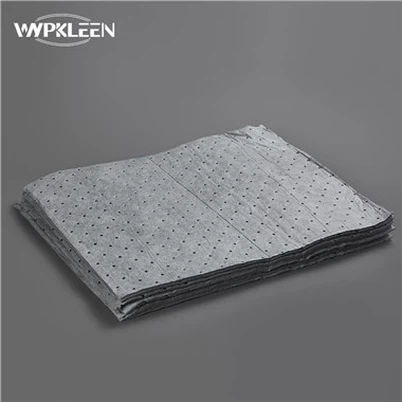

What is the compressibility of a Chemical Absorbent Pad?
Leave a message

As a supplier of Chemical Absorbent Pads, I often encounter inquiries regarding their various properties. One of the frequently asked questions is about the compressibility of these pads. In this blog post, I'll delve into what compressibility means in the context of Chemical Absorbent Pads, why it matters, and how it relates to the overall performance of the product.
Understanding Compressibility
Compressibility refers to the ability of a material to reduce in volume when subjected to pressure. In the case of Chemical Absorbent Pads, it is the degree to which the pad can be squeezed or compressed without losing its essential functionality. When a pad is compressed, its internal structure changes, and this can have implications for its absorbency, durability, and handling.
The compressibility of a Chemical Absorbent Pad is influenced by several factors. The first is the material used in its construction. Different materials have different inherent compressibility characteristics. For example, pads made from synthetic fibers may have a different compressibility profile compared to those made from natural fibers. Synthetic fibers are often more resilient and can withstand higher levels of compression without significant deformation. On the other hand, natural fibers may be more prone to collapse under pressure, which can affect their absorbency.
The density of the pad also plays a crucial role in its compressibility. A denser pad generally has less room for compression as its fibers are more tightly packed. Conversely, a less dense pad can be compressed more easily. However, it's important to note that density is not the only factor determining absorbency. A pad with the right balance of density and compressibility can offer optimal performance.
Why Compressibility Matters
Compressibility is a significant factor in the practical use of Chemical Absorbent Pads. Here are some key reasons why it matters:

Storage and Transportation
Compressible pads are easier to store and transport. They can be stacked more efficiently, taking up less space in warehouses and during shipping. This not only reduces storage costs but also allows for more cost - effective transportation. For example, if you can fit more compressed pads into a shipping container, you can save on freight charges.
Application Flexibility
In many industrial settings, there may be limited space for spill cleanup. Compressible pads can be squeezed into tight spaces to reach spills that are otherwise difficult to access. This makes them a versatile tool for handling spills in a variety of environments, from small machinery compartments to large industrial floors.
Absorbency and Retention
When a pad is compressed during use, it can help to expel excess liquid that it has absorbed. This is particularly useful when dealing with large spills. By compressing the pad, you can recover some of the absorbed liquid, which can be recycled or disposed of properly. Additionally, a pad with good compressibility can maintain its absorbency over multiple compressions, ensuring that it continues to perform effectively throughout the cleanup process.
Compressibility and Different Types of Chemical Absorbent Pads
Let's take a look at how compressibility varies among different types of Chemical Absorbent Pads available in the market.

Industrial Oil Absorbent Sheet
Industrial Oil Absorbent Sheets are designed specifically for absorbing oil spills. These sheets are often made from materials that have good compressibility. The compressibility allows them to be easily folded or rolled up for storage and transportation. When used to clean up oil spills, they can be compressed to extract the absorbed oil, making them reusable in some cases. The materials used in these sheets are engineered to maintain their integrity even after multiple compressions, ensuring long - term performance.
Oil Only Laminated Sorbent Pad
Oil Only Laminated Sorbent Pads are another type of product in our range. These pads are constructed with a laminated layer that enhances their durability and absorbency. The compressibility of these pads is carefully balanced to ensure that they can absorb oil effectively while also being able to withstand compression. The laminated layer provides additional support, preventing the pad from collapsing under pressure and maintaining its shape during use.
Chemical Absorbent Pad
Our Chemical Absorbent Pads are designed to handle a wide range of chemical spills. They are made from materials that are resistant to the corrosive effects of various chemicals. The compressibility of these pads is optimized to ensure that they can be used in different cleanup scenarios. Whether it's a small chemical spill on a laboratory bench or a large industrial spill, these pads can be compressed to fit into the spill area and effectively absorb the chemicals.
Measuring Compressibility
Measuring the compressibility of Chemical Absorbent Pads is a complex process that involves several parameters. One common method is to use a compression test machine. This machine applies a controlled amount of pressure to the pad and measures the resulting change in volume. The compression ratio, which is the ratio of the original volume to the compressed volume, is then calculated. A higher compression ratio indicates greater compressibility.
Another important parameter is the recovery rate. After the pad has been compressed, the recovery rate measures how well the pad returns to its original shape. A pad with a high recovery rate can maintain its absorbency and structural integrity over multiple compressions.
Conclusion
In conclusion, the compressibility of Chemical Absorbent Pads is a crucial property that affects their storage, transportation, application, and overall performance. As a supplier, we understand the importance of providing pads with the right compressibility characteristics to meet the diverse needs of our customers. Whether you're dealing with oil spills or chemical spills, our range of Industrial Oil Absorbent Sheet, Oil Only Laminated Sorbent Pad, and Chemical Absorbent Pad offers solutions that balance compressibility with absorbency and durability.
If you're interested in learning more about our Chemical Absorbent Pads or would like to discuss your specific requirements, we invite you to contact us for a procurement discussion. Our team of experts is ready to assist you in finding the best products for your needs.
References
- ASTM International. (20XX). Standard test methods for evaluating the physical properties of sorbent materials.
- Smith, J. (20XX). The science of absorbent materials. Journal of Industrial Chemistry, 25(3), 123 - 135.
- Johnson, A. (20XX). Compressibility and its impact on absorbent product performance. Proceedings of the International Conference on Absorbent Technologies, 45 - 52.