What Is A Non-woven Fabric?
Leave a message
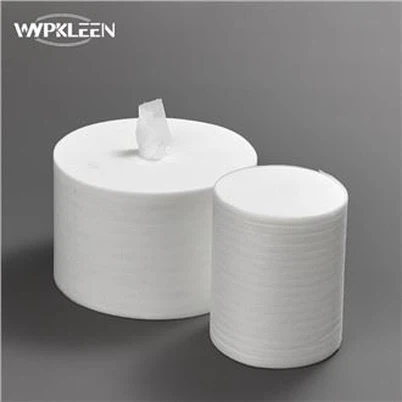
Non-woven fabric, also known as non-woven cloth or non-woven felt, is a kind of fabric structure made by bonding or interlocking fibers without the traditional weaving process. It is a versatile and widely used textile material that finds applications in various industries including clothing, home furnishing, construction, medical, and packaging.
The manufacturing process of non-woven fabric involves several steps, starting from the raw material procurement to the final product inspection. The raw materials used for non-woven fabric production are primarily fibers, such as polypropylene, polyester, cotton, wool, glass fibers, and carbon fibers. The fibers are first processed into webs using various methods such as electrostatic flocking, needling, stitching, and hydro-entanglement. These webs are then combined together to form a non-woven fabric.
Non-woven fabrics can be classified into different types based on their fiber orientation, density, thickness, and binder content. The most common types of non-woven fabrics include needle-punched felt, spun-bond, and flashing.
needle punched felt: This type of non-woven fabric is produced by needle-punching fibers into a base material to create entanglement and locking of fibers. It is a dense and versatile material that finds applications in filter media, insulation, upholstery padding, and carpet backing.
spunbond: spun-bond fabric is created by extruding molten polymers through a spinneret to form fine filaments that are collected randomly on a belt. The filaments are then consolidated into a non-woven fabric using heat and pressure. Spunbond fabric is lightweight, strong, and breathable making it suitable for various applications such as clothing, medical products, and home furnishing.
flashing: Flashing is a type of non-woven fabric with a very open structure and is typically used as a sealant or protective layer in construction and automotive industries. It is also used as a filter medium in the oil and gas industry. Flashing can be produced using various fibers such as polypropylene, polyester, and fiberglass.
Non-woven fabrics offer several advantages over traditional woven fabrics. They are lightweight and can be produced in various thicknesses and densities to meet specific application requirements. They are also very versatile and can be easily tailored to meet specific end-user needs. Additionally, non-woven fabrics are generally more porous and breathable than woven fabrics making them suitable for use in clothing and medical products where breathability is important.
Non-woven fabric is a type of textile material made by bonding or interlocking fibers without the traditional weaving process. It is lightweight, versatile, and widely used across various industries including clothing, home furnishing, construction, medical, and packaging. The manufacturing process involves several steps starting from raw material procurement to the final product inspection. Non-woven fabrics can be classified into different types based on their fiber orientation, density, thickness, and binder content. The most common types include needle-punched felt, spunbond, and flashing.